Mujaddara
Mujaddara is a Levantine classic made with lentils, rice and deeply browned onions. Simple, nourishing and aromatic, it relies on the contrast between tender lentils, separate grains of rice and a generous amount of almost crisp caramelised onions.
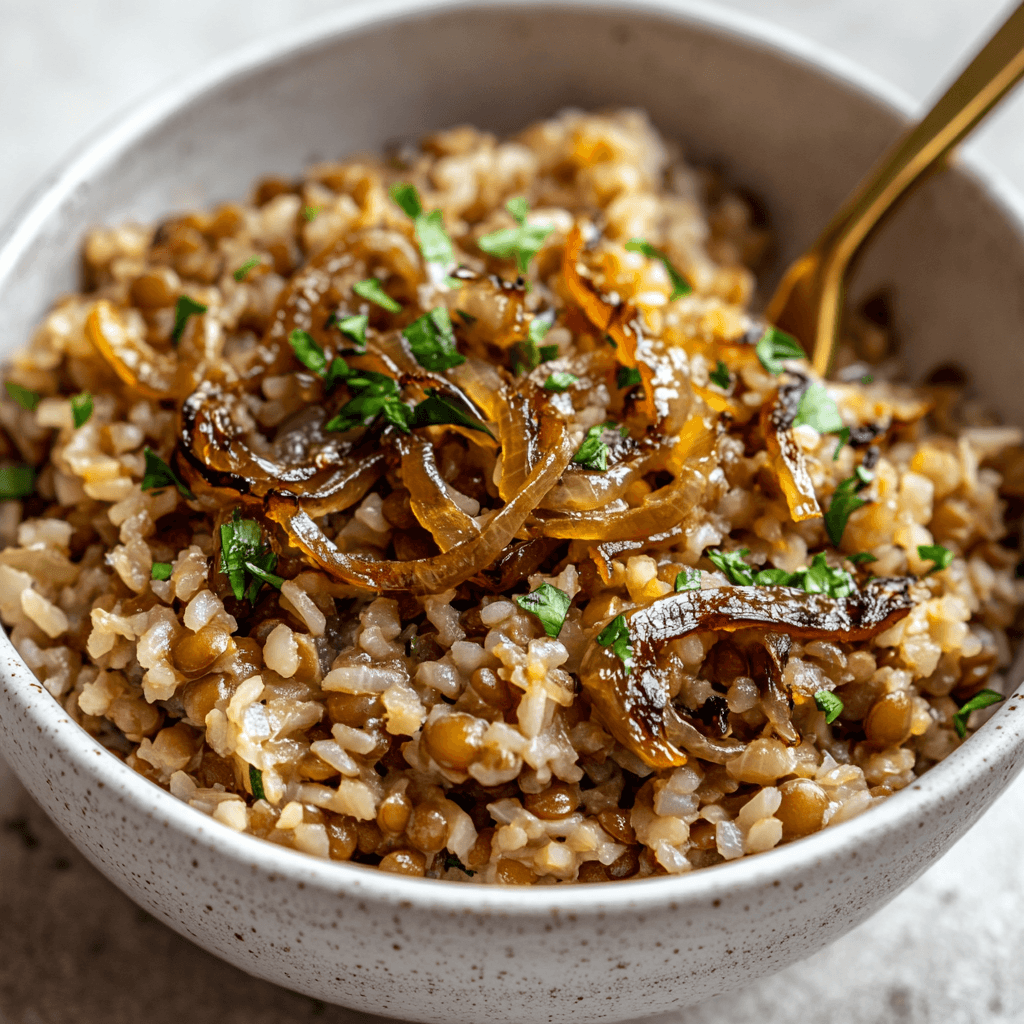
About 420 kcal per serving
Ingredients
- brown or green lentils (rinsed and sorted)300 g
- basmati or long-grain rice (rinsed and soaked for 20 minutes)250 g
- large yellow onions (thinly sliced into half-moons)5 pieces
- olive oil (for cooking the onions)80 ml
- vegetable oil (optional, for making some onions crisper)30 ml
- ground cumin7 g
- ground black pepper3 g
- fine salt (adjust at the end of cooking)10 g
- water (approximate amount, adjust according to the lentils and rice)1 100 ml
- flat-leaf parsley (chopped, optional for serving)20 g
- lemon (cut into wedges for serving)1 piece
Preparation
Rinse the lentils
Place the lentils in a sieve, remove any small stones or damaged lentils, then rinse thoroughly under cold water.
Start cooking the lentils
Place the lentils in a pot with about 700 ml water. Bring to a boil, then reduce to a simmer. Cook for about fifteen to twenty minutes; the lentils should be nearly tender but still slightly firm in the centre.
Rinse the rice
While the lentils cook, rinse the rice four to five times until the water runs almost clear. Cover with fresh water and soak for twenty minutes.
Slice the onions
Peel the onions and slice them into thin, even half-moons. Separate the slices with your fingers so they cook evenly.
Start cooking the onions
Heat the olive oil in a large frying pan over medium heat. Add the onions and a small pinch of salt. Toss to coat all the slices.
Soften the onions
Cook for ten to fifteen minutes over medium-low heat, stirring regularly. The onions should first become very soft and translucent before they begin to brown.
Caramelise slowly
Increase the heat slightly and cook for another fifteen to twenty minutes, stirring often. Scrape up the browned bits from the pan. The onions should become deep golden brown without burning.
Reserve topping onions
Remove about one third of the onions once deeply browned and place them on a plate. They will be used generously as the final topping.
Make some onions crisp
For a crisper topping, heat the vegetable oil in a small pan and fry some of the reserved onions for another two to four minutes. Remove as soon as they are deep brown and crisp.
Check the lentils
Taste a lentil. It should be easy to bite while retaining a slightly firm centre. If still very hard, continue cooking for a few more minutes before adding the rice.
Add the spices
Add the cumin, black pepper and about half the salt to the lentil pot. Stir gently to flavour the cooking liquid.
Drain the rice
Drain the soaked rice thoroughly. Leave it in the sieve for a few moments so excess water drains completely.
Add the rice to the lentils
Add the drained rice to the pot with the lentils. Add about two thirds of the onions remaining in the frying pan, along with some of their flavoured oil.
Adjust the liquid
Check the water level. The liquid should sit about one centimetre above the rice-lentil mixture. Gradually add up to about 400 ml additional water if necessary.
Bring to a gentle boil
Bring everything to a gentle boil over medium heat. Stir once to distribute the rice, then immediately reduce the heat to low.
Cook covered
Cover tightly and cook for about fifteen to eighteen minutes without stirring. The rice should absorb the liquid while the lentils finish cooking.
Check doneness
Taste a few grains of rice and one lentil. If the rice is still firm but the pot is dry, add two to three tablespoons of hot water, cover and cook for another five minutes.
Adjust the seasoning
Once the rice and lentils are tender, taste and add the remaining salt if necessary. The Mujaddara should be well seasoned while allowing the onions and cumin to dominate.
Let it rest
Turn off the heat and leave the pot covered for ten minutes. The trapped steam finishes the cooking and allows the rice grains to firm slightly.
Fluff gently
Remove the lid and gently fluff with a fork or large spoon. Avoid vigorous mixing so the lentils remain whole and the rice grains distinct.
Plate
Transfer the Mujaddara to a large serving dish. Generously scatter the reserved browned and crisp onions over the entire surface.
Add the finishing touches
Optionally add chopped parsley and serve with lemon wedges. A final squeeze of lemon adds pleasant freshness.
Serve
Serve hot, warm or at room temperature with yogurt, tomato and cucumber salad, fattoush, pickles or fresh vegetables.
Tips & tricks
- Use brown or green lentils that hold their shape during cooking.
- Do not fully cook the lentils before adding the rice; they will finish cooking together.
- Rinse the rice several times to remove excess starch.
- Soak the rice for twenty minutes for more even cooking.
- Use plenty of onions; their sweetness and slight bitterness are essential to the flavour.
- Cook the onions in stages to achieve deep browning without burning them.
- Reserve some of the crispiest onions for the topping.
- Add the cumin to the cooking liquid rather than the onions so it distributes evenly.
- Once the rice is added, avoid frequent stirring so the grains do not break.
- Rest the covered pot for ten minutes off the heat before fluffing.
- Taste and adjust the salt only after the lentils are fully cooked.
- Serve with yogurt, tomato-cucumber salad or pickles for freshness and acidity.
Variations
- Replace the rice with bulgur for a more rustic version.
- Add extra cumin for a warmer flavour.
- Add a small pinch of cinnamon or allspice.
- Top with very crisp fried onions when serving.
- Serve with a drizzle of lemon juice.
- Add fresh parsley or coriander when serving.
- Add chickpeas for an even more substantial version.
- Serve cold or at room temperature with a fresh salad.
Storage
Mujaddara keeps for up to four days in the refrigerator in an airtight container. If possible, store the crisp onions separately so they do not soften. Reheat gently in a frying pan or microwave with one or two tablespoons of water. It can be frozen for up to two months, although the rice will be slightly softer after thawing.
Nutrition facts(per serving)
| Calories | 420 kcal |
|---|---|
| Protein | 15 g |
| Carbs | 63 g |
| Fat | 13 g |
| Fiber | 11 g |
| Sugars | 7 g |
What to serve with this recipe?
- Fattoush
- Tomato and cucumber salad
- Pickles
- Lemon wedges
Frequently asked questions
Reviews
No reviews yet. Be the first to leave one!
Similar recipes
 Vegetarian
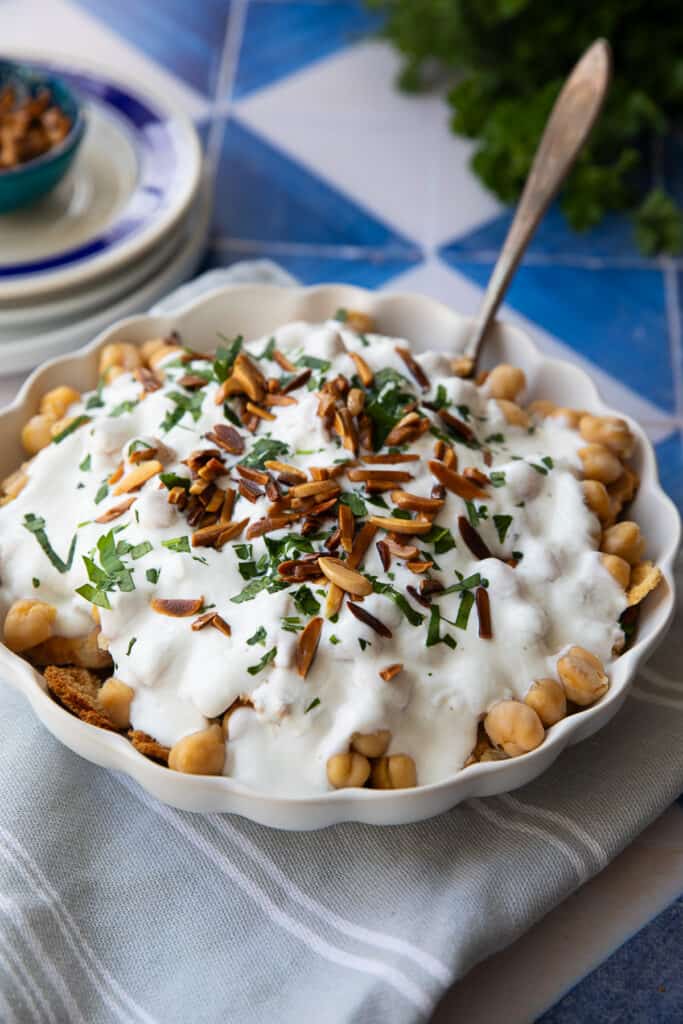
Fatteh is a generous Levantine dish made with crisp pita bread, warm chickpeas and a creamy yogurt, tahini, lemon and garlic sauce, finished with toasted pine nuts, parsley and spices. The contrast between crunchy bread, tender chickpeas and cool creamy sauce is essential to the dish.
 Meat
MeatShish Tawook is an iconic Levantine chicken skewer marinated in yogurt, lemon, garlic, oil and spices, then grilled over high heat. A good marinade tenderises the meat, promotes browning and produces juicy chicken with lightly caramelised edges.
 Meat
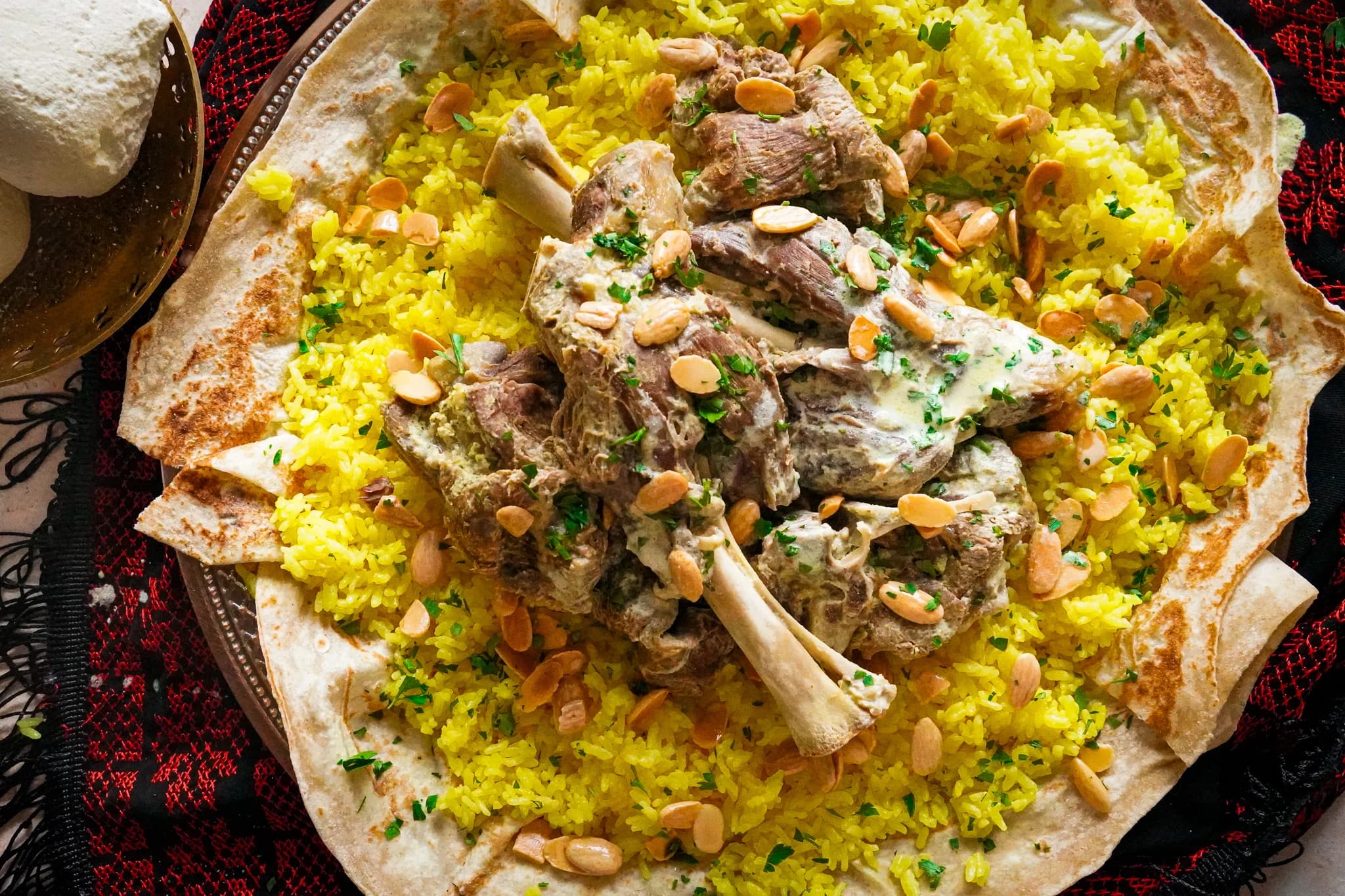
MeatMansaf is an iconic Jordanian dish of lamb slowly cooked in a jameed sauce, a strongly flavoured fermented dried yogurt, then served over shrak flatbread and fragrant rice. The dish is generously coated with sauce and finished with toasted almonds or pine nuts. Success depends on very tender lamb, a smooth balanced jameed sauce and fluffy separate grains of rice.