Chow Mein – Stir-Fried Noodles
Chinese stir-fried noodles cooked in a hot wok with chicken, cabbage, carrot, bean sprouts and spring onions, coated in a glossy soy and sesame sauce. Very fast high-heat cooking keeps the vegetables crisp, the chicken tender and the noodles lightly toasted without becoming soft.
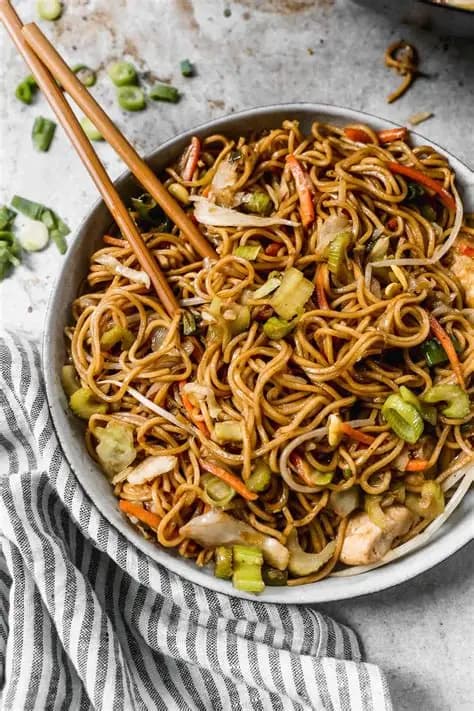
About 560 kcal per serving
Ingredients
- Chinese egg noodles (fresh or dried, suitable for stir-frying)350 g
- chicken (breast or boneless thigh, thinly sliced)400 g
- light soy sauce (for the marinade)15 ml
- Shaoxing rice wine (optional, for the marinade)10 ml
- cornstarch (to tenderise the chicken)8 g
- light soy sauce (for the sauce)30 ml
- dark soy sauce (for colour)15 ml
- oyster sauce (for the sauce)20 ml
- sesame oil (for the sauce)10 ml
- sugar (to balance the sauce)10 g
- water or chicken stock (for the sauce)60 ml
- white cabbage or Chinese cabbage (thinly shredded)200 g
- carrot (cut into thin julienne)1 piece
- bean sprouts (rinsed and well drained)150 g
- spring onions (white and green parts separated)4 pieces
- garlic cloves (finely chopped)2 pieces
- fresh ginger (finely grated or chopped)12 g
- vegetable oil (for stir-frying)30 ml
Preparation
Marinate the chicken
Place the thinly sliced chicken in a bowl. Add the 15 ml of light soy sauce, Shaoxing wine and 8 g of cornstarch. Mix until evenly coated, then rest for fifteen to twenty minutes in the refrigerator.
Prepare the sauce
Combine the 30 ml of light soy sauce, dark soy sauce, oyster sauce, sesame oil, sugar and water or stock. Whisk until the sugar dissolves, then keep beside the wok.
Prepare the vegetables
Finely shred the cabbage. Cut the carrot into julienne. Separate the white and green parts of the spring onions and cut them into short lengths. Chop the garlic and ginger. Rinse the bean sprouts and dry them thoroughly.
Cook the noodles
Bring a large pot of water to a boil. Cook the noodles according to their type, reducing the package cooking time by about one minute. They should be flexible but still firm because they will finish cooking in the wok.
Drain and oil the noodles
Drain the noodles immediately and shake thoroughly to remove as much water as possible. If very starchy, rinse very briefly under cold water and drain again. Toss with one teaspoon of vegetable oil and spread on a tray.
Heat the wok thoroughly
Heat an empty wok over high heat until very hot and a drop of water evaporates almost immediately. Add about half of the oil and swirl it around the sides.
Sear the chicken
Place the chicken in the wok in a single layer. Let it sear for thirty to forty seconds before stirring. Then stir-fry for two to three minutes until almost fully cooked and lightly browned. Remove and set aside.
Cook the aromatics
Add the remaining oil to the wok. Add the garlic, ginger and white parts of the spring onions. Stir-fry for twenty to thirty seconds, stirring constantly to release the aromas without burning the garlic.
Stir-fry the vegetables
Add the carrot followed by the cabbage. Stir-fry over very high heat for two to three minutes. The vegetables should soften slightly while retaining crunch and bright colour.
Add the noodles
Add the well-drained noodles to the centre of the wok. Spread them out and leave them in contact with the hot surface for twenty to thirty seconds without moving them too much. Then turn them with two spatulas or chopsticks to begin lightly toasting them.
Return the chicken
Return the chicken to the wok and toss with the noodles and vegetables for about one minute so all ingredients are evenly distributed.
Add the sauce
Stir the sauce and gradually pour it around the very hot sides of the wok. Toss the noodles immediately for one to two minutes until the sauce is absorbed and they become glossy without sitting in excess liquid.
Add the bean sprouts
Add the bean sprouts and green parts of the spring onions. Stir-fry for only thirty to forty-five seconds so they heat through while retaining freshness and crunch.
Check the texture
Taste a noodle. It should be tender but still slightly springy. If the mixture seems too dry, add one or two tablespoons of hot water and toss quickly. If the noodles are too wet, cook for another thirty seconds over high heat.
Serve immediately
Immediately divide the Chow Mein among warm bowls or plates. Serve as is or with stir-fried vegetables, chilli sauce or a little extra sesame oil.
Tips & tricks
- Prepare all ingredients before heating the wok because the cooking process is very fast.
- Use Chinese egg noodles or noodles specifically labelled for Chow Mein.
- Do not overcook the noodles in water; they should still be slightly firm before stir-frying.
- Briefly rinse the noodles after cooking if necessary, then drain them extremely well.
- Toss the noodles with a small amount of oil to prevent sticking.
- Slice the chicken thinly against the grain so it stays tender.
- Cook the chicken in a single layer and in batches if the wok is small.
- Stir-fry the vegetables briefly so they retain some crunch.
- Pour the sauce around the hot sides of the wok rather than directly into the centre.
- Leave the noodles in contact with the wok for a few seconds before tossing to develop light browning.
- Add the bean sprouts near the end because they cook very quickly.
- Serve immediately because the noodles continue absorbing the sauce after cooking.
Variations
- Replace the chicken with thinly sliced beef.
- Use shrimp for a seafood version.
- Omit the meat and add tofu, mushrooms and extra vegetables for a vegetarian version.
- Add fresh chilli or chilli oil for a spicier version.
- Add bok choy, broccoli or snow peas.
- Use thicker wheat noodles for a more substantial texture.
- Add a few roasted cashews just before serving.
Storage
Chow Mein keeps for up to two days in the refrigerator in an airtight container. Reheat preferably in a very hot wok or large frying pan with one or two tablespoons of water to loosen the sauce. Avoid prolonged reheating, which softens the noodles and vegetables. Freezing is possible but not recommended because the noodles and bean sprouts lose texture.
Nutrition facts(per serving)
| Calories | 560 kcal |
|---|---|
| Protein | 31 g |
| Carbs | 68 g |
| Fat | 19 g |
| Fiber | 6 g |
| Sugars | 8 g |
What to serve with this recipe?
- Stir-fried bok choy
- Chinese smashed cucumber
- Spring rolls
- Jasmine tea
Frequently asked questions
Reviews
No reviews yet. Be the first to leave one!
Similar recipes
 Vegetarian
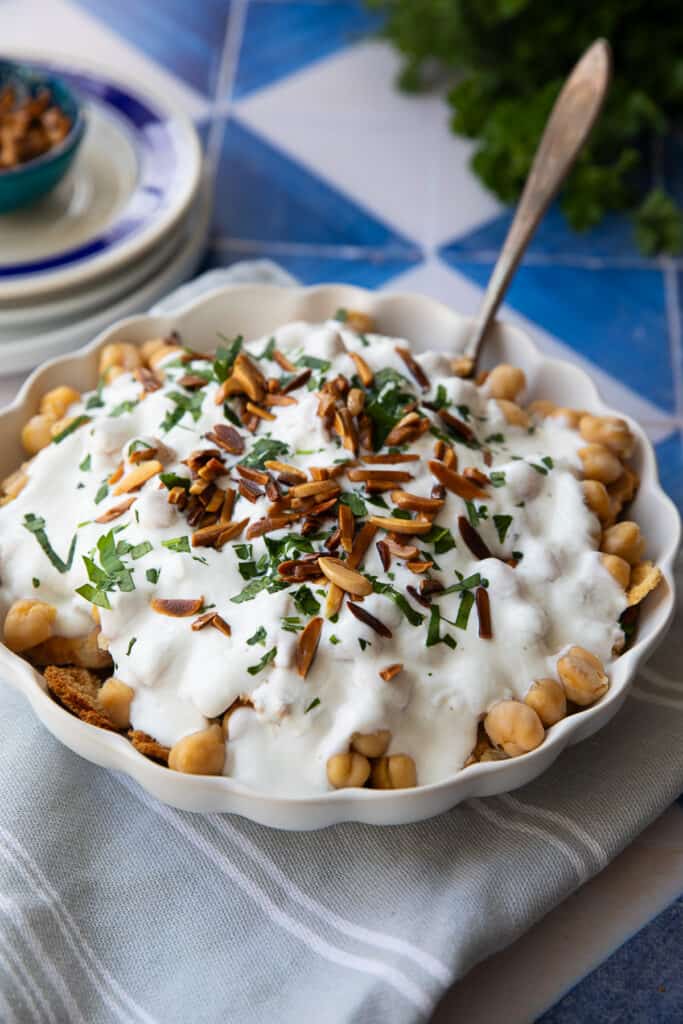
Fatteh is a generous Levantine dish made with crisp pita bread, warm chickpeas and a creamy yogurt, tahini, lemon and garlic sauce, finished with toasted pine nuts, parsley and spices. The contrast between crunchy bread, tender chickpeas and cool creamy sauce is essential to the dish.
 Meat
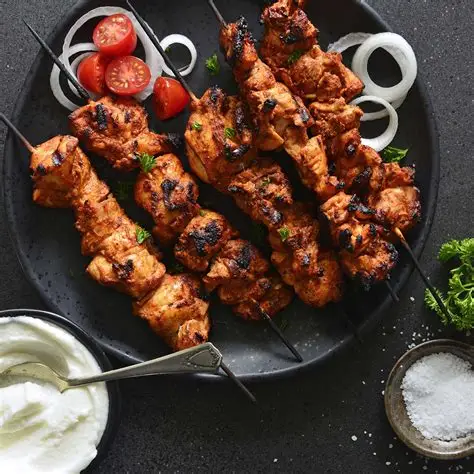
MeatShish Tawook is an iconic Levantine chicken skewer marinated in yogurt, lemon, garlic, oil and spices, then grilled over high heat. A good marinade tenderises the meat, promotes browning and produces juicy chicken with lightly caramelised edges.
 Vegan
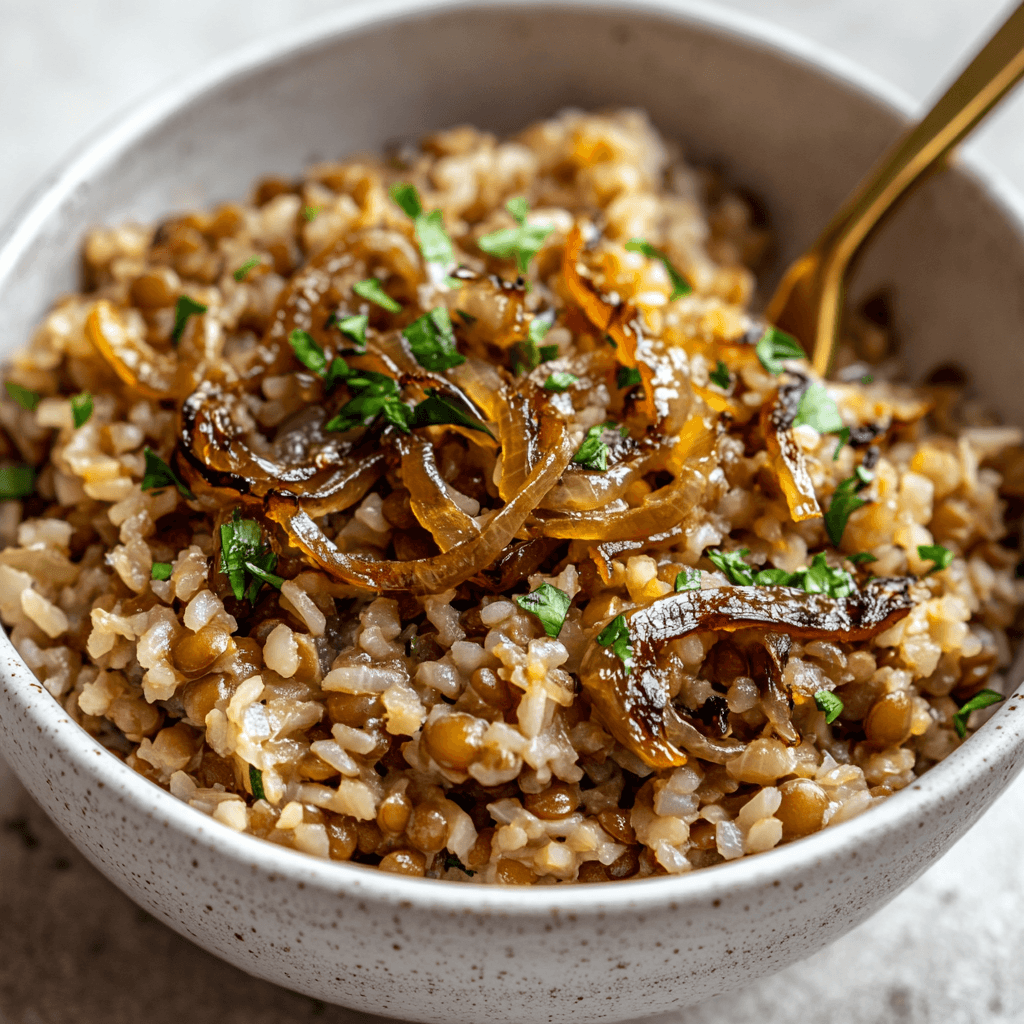
VeganMujaddara is a Levantine classic made with lentils, rice and deeply browned onions. Simple, nourishing and aromatic, it relies on the contrast between tender lentils, separate grains of rice and a generous amount of almost crisp caramelised onions.