German beef rouladen
German beef roulades filled with mustard, bacon, onion and pickles, rolled and slowly braised in a red wine and stock sauce. The long cooking tenderises the meat while the browned juices and vegetables create a rich, deeply flavoured gravy.
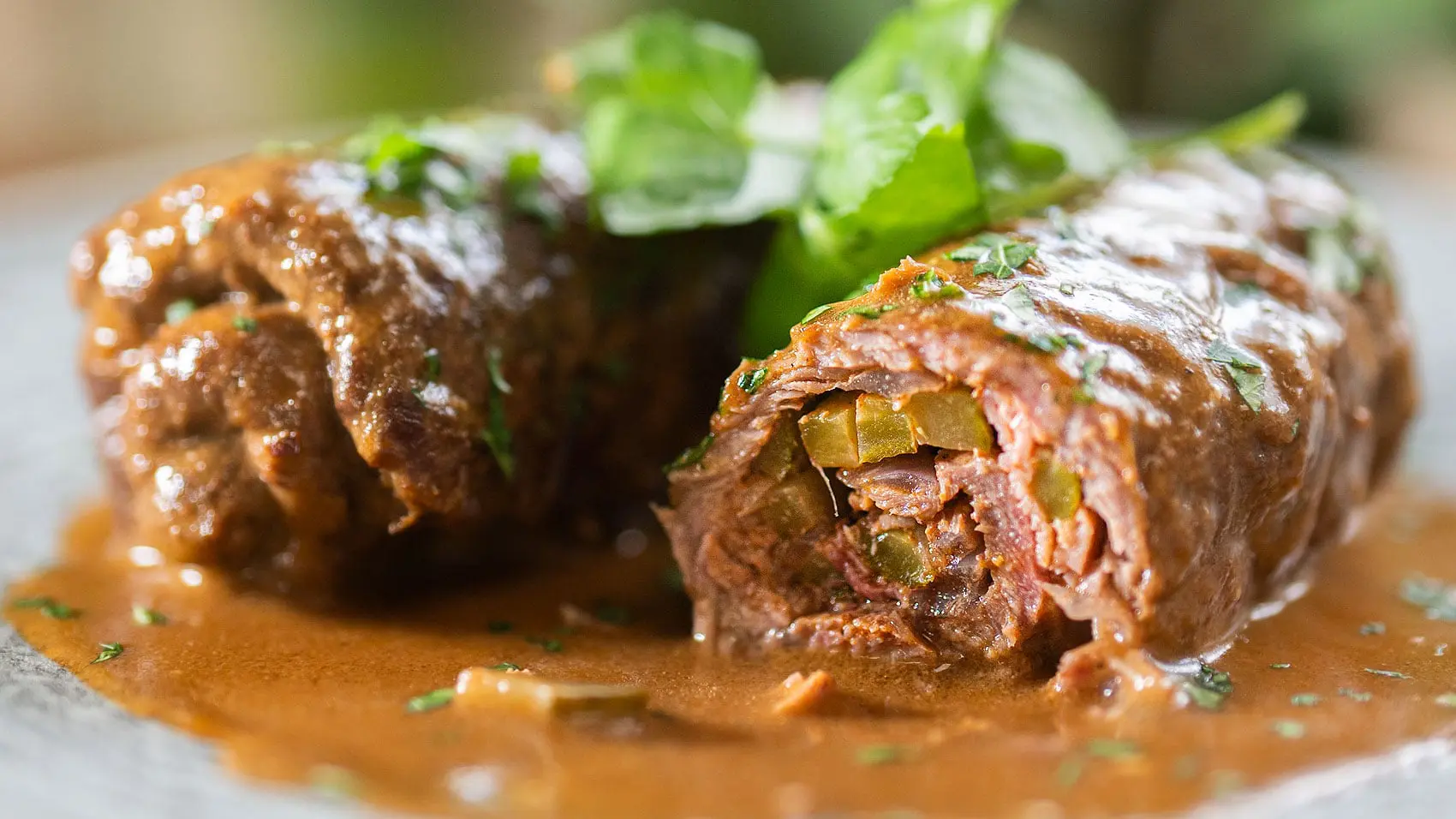
About 590 kcal per serving
Ingredients
- large thin beef slices (about 180 g each, suitable for roulades)4 pieces
- German mustard (medium or mild mustard)40 g
- smoked bacon slices (thin)8 pieces
- yellow onions (one for the filling, one for the sauce)2 pieces
- pickles (cut into strips)4 pieces
- vegetable oil (for searing the roulades)20 ml
- carrots (cut into small dice)2 pieces
- celery stalks (cut into small dice)2 pieces
- tomato paste25 g
- dry red wine200 ml
- beef stock (hot and lightly salted)500 ml
- bay leaf1 piece
- thyme sprigs3 pieces
- cornstarch (optional, for thickening the gravy)10 g
- cold water (for mixing with the cornstarch)20 ml
- fine salt (adjust according to the stock and bacon)6 g
- ground black pepper2 g
Preparation
Prepare the beef slices
Place each beef slice between two sheets of baking paper and gently pound it with a meat mallet until evenly about four to five millimetres thick. Season both sides very lightly with salt and pepper.
Fill the roulades
Spread about one teaspoon of mustard over each beef slice, leaving a border of about one centimetre. Place two bacon slices, a few onion strips and one pickle cut into sticks in the centre of each piece.
Roll and secure
Fold the sides of the beef slightly inward, then roll tightly from the short end. Secure each roulade with kitchen string, toothpicks or metal roulade pins so it does not open during cooking.
Sear the roulades
Heat the oil in a large casserole over medium-high heat. Brown the roulades on all sides for eight to ten minutes in total. The browning should be deep enough to create flavourful browned bits. Remove the roulades and set aside.
Cook the vegetables
Add the remaining onion, carrots and celery to the casserole. Cook for eight minutes, stirring regularly, until the vegetables begin to brown.
Add the tomato paste
Stir in the tomato paste and cook for one to two minutes while stirring. It should darken slightly without burning to develop a deeper flavour.
Deglaze with red wine
Pour in the red wine and carefully scrape the bottom of the casserole with a wooden spoon to dissolve the browned bits. Reduce for five to seven minutes, until the volume has decreased by about half.
Assemble the braise
Add the hot stock, bay leaf and thyme. Return the roulades to the casserole in a single layer. The liquid should reach about two-thirds of their height. Bring to a gentle simmer.
Braise slowly
Cover the casserole and simmer over very low heat for about one and a half to two hours. Carefully turn the roulades after forty-five minutes. Add a little hot stock if the sauce reduces too quickly.
Check for tenderness
The meat is ready when a thin knife slides in easily and the roulades are tender without falling apart. Carefully remove them and keep warm while preparing the gravy.
Prepare the gravy
Remove the bay leaf and thyme. Blend the vegetables with the cooking liquid until smooth, or strain the liquid for a clearer gravy. Reduce uncovered for five to ten minutes until the desired consistency is reached.
Thicken if necessary
If the gravy remains too thin, mix the cornstarch with the cold water. Gradually whisk this mixture into the simmering gravy and cook for one to two minutes. Taste and adjust the salt and pepper.
Serve the rouladen
Remove the string or pins from the roulades. Return them to the gravy for a few minutes to reheat, then serve one roulade per person with a generous amount of gravy. Accompany with braised red cabbage, potatoes or potato dumplings.
Tips & tricks
- Choose long, thin and even slices of beef suitable for roulades.
- Lightly pound the meat between two sheets of baking paper to obtain an even thickness.
- Do not overfill the roulades so they can be closed properly.
- Leave a free border around the meat so the filling does not escape.
- Secure the roulades with kitchen string, toothpicks or roulade pins.
- Sear the roulades thoroughly on all sides before braising to develop browned flavours.
- Reduce the wine before adding the stock to prevent the sauce from tasting too acidic.
- Maintain a gentle simmer during cooking so the meat remains tender.
- Turn the roulades once or twice during braising for even cooking.
- Let the roulades rest for a few minutes before removing the string and serving.
Variations
- Replace the bacon with smoked ham for a leaner filling.
- Add sliced mushrooms to the sauce for a more earthy flavour.
- Use dark beer instead of red wine for a maltier gravy.
- Add a thin strip of carrot inside the roulades.
- Replace the pickles with pickled onions for a different acidity.
- Stir a spoonful of crème fraîche into the sauce at the end for a milder version.
Storage
Rouladen keep for up to three days in the refrigerator in an airtight container, ideally covered with their gravy. Reheat very gently, covered, in a saucepan or in a 160°C oven so the meat does not dry out. They can be frozen with the sauce for up to three months. Thaw overnight in the refrigerator before reheating.
Nutrition facts(per serving)
| Calories | 590 kcal |
|---|---|
| Protein | 48 g |
| Carbs | 16 g |
| Fat | 35 g |
| Fiber | 3 g |
| Sugars | 6 g |
What to serve with this recipe?
- Braised red cabbage
- Potato dumplings
- Spaetzle
- Mashed potatoes
Frequently asked questions
Reviews
No reviews yet. Be the first to leave one!
Similar recipes
 Vegetarian
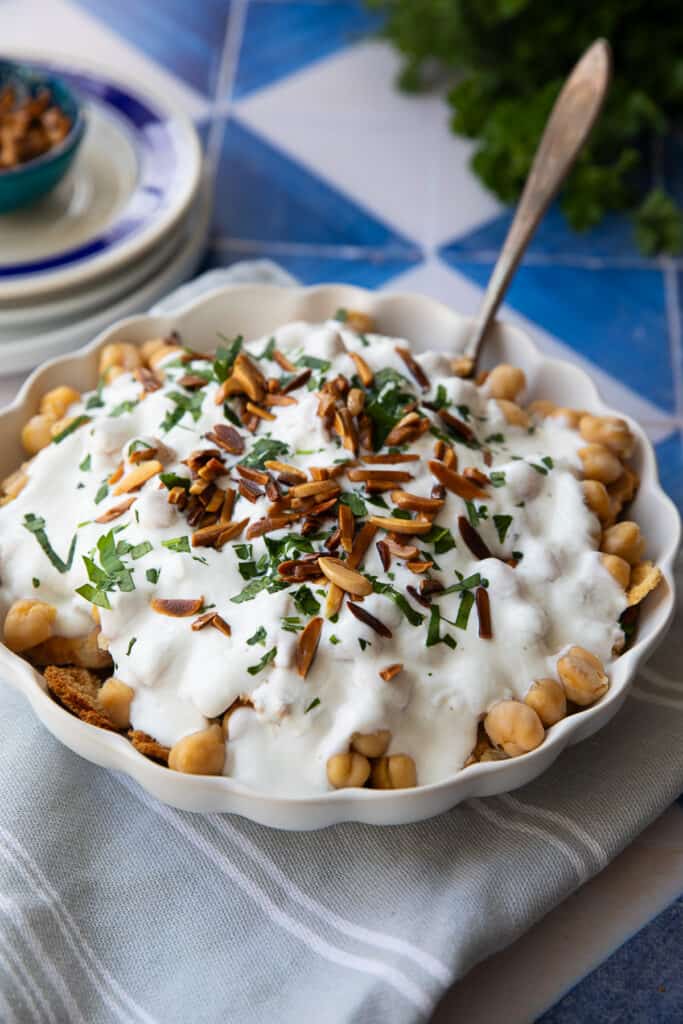
Fatteh is a generous Levantine dish made with crisp pita bread, warm chickpeas and a creamy yogurt, tahini, lemon and garlic sauce, finished with toasted pine nuts, parsley and spices. The contrast between crunchy bread, tender chickpeas and cool creamy sauce is essential to the dish.
 Meat
MeatShish Tawook is an iconic Levantine chicken skewer marinated in yogurt, lemon, garlic, oil and spices, then grilled over high heat. A good marinade tenderises the meat, promotes browning and produces juicy chicken with lightly caramelised edges.
 Vegan
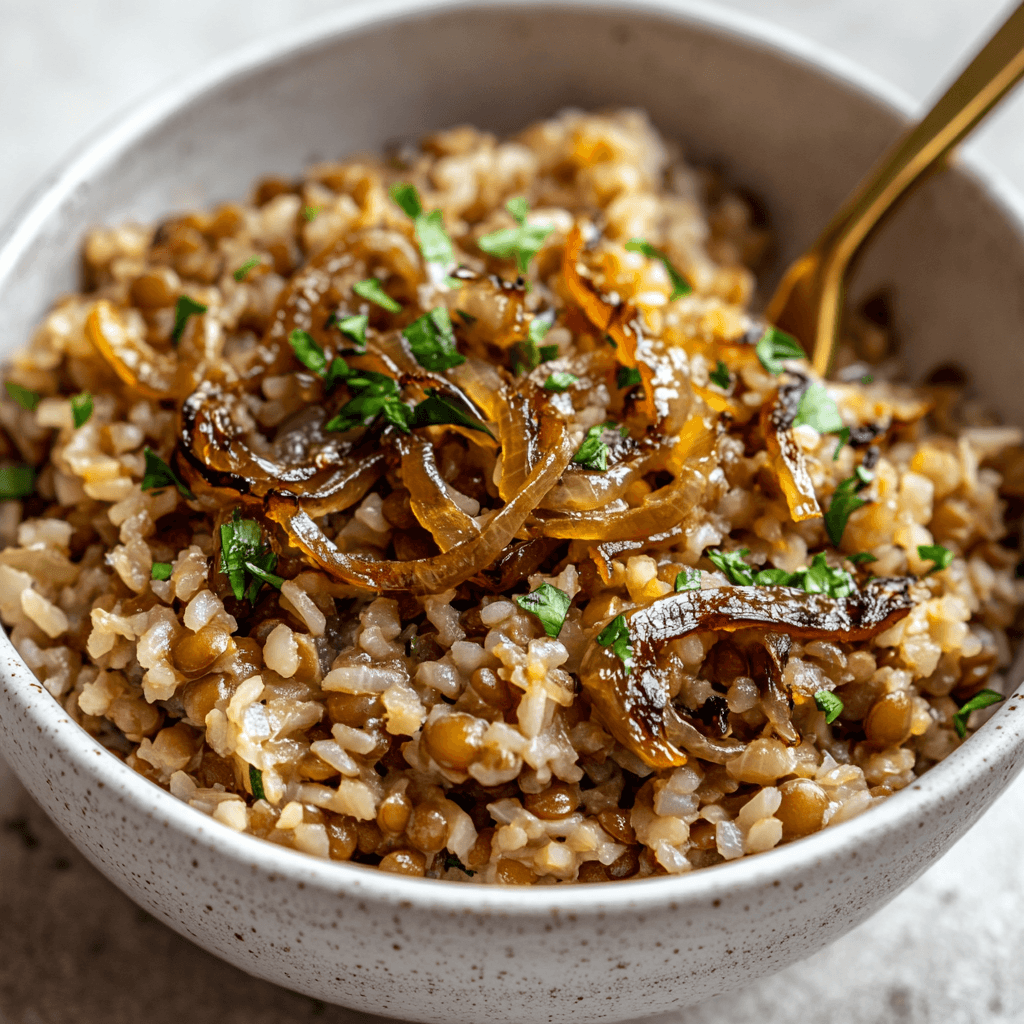
VeganMujaddara is a Levantine classic made with lentils, rice and deeply browned onions. Simple, nourishing and aromatic, it relies on the contrast between tender lentils, separate grains of rice and a generous amount of almost crisp caramelised onions.