German Pretzel
German pretzels with a deep mahogany-brown crust, lightly crisp exterior and soft, chewy crumb. The dough is shaped into the classic knot, briefly dipped in an alkaline baking-soda bath before baking, then sprinkled with coarse salt.
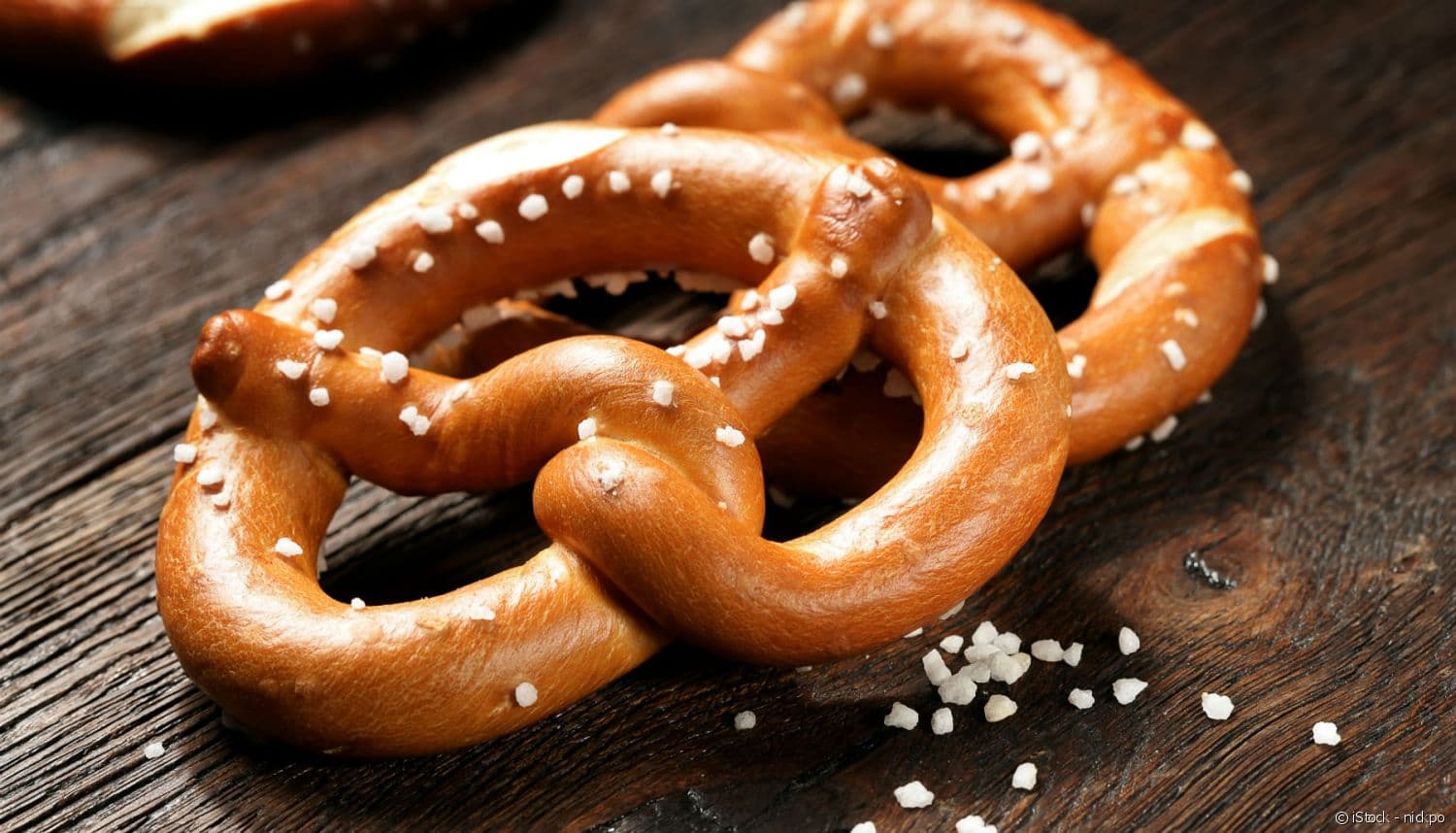
About 260 kcal per serving
Ingredients
- wheat flour (bread flour or high-protein flour)500 g
- water (lukewarm, about 25°C)280 ml
- instant dry yeast7 g
- granulated sugar (to support yeast activity)10 g
- fine salt (for the dough)10 g
- butter (softened)30 g
- water (for the alkaline bath)2 000 ml
- baking soda (for the alkaline bath)80 g
- coarse salt (for topping)15 g
Preparation
Activate the yeast
Pour the lukewarm water into a large bowl. Add the yeast and sugar, then stir. Leave for five to ten minutes until a light foam appears on the surface.
Make the dough
Add the flour and salt to the yeast mixture. Mix until a rough dough forms, then incorporate the softened butter. Knead for eight to ten minutes by hand or six to eight minutes in a mixer until smooth, supple and elastic.
Let the dough rise
Shape the dough into a ball, place it in a lightly oiled bowl and cover. Let rise for about one hour in a warm place, until nearly doubled in volume.
Divide the dough
Gently deflate the dough and place it on a clean work surface. Divide into eight portions of about one hundred grams each. Cover the pieces with a cloth so they do not dry out while shaping.
Roll the ropes
Roll each portion into a rope about fifty to sixty centimetres long. Keep the centre slightly thicker and gradually taper both ends.
Shape the pretzels
Form the rope into a U, cross the two ends twice, then fold them downward and press them onto each side of the thicker centre. Make sure the joins stick firmly so they do not separate during dipping.
Air-dry the pretzels
Place the shaped pretzels on a baking tray lined with baking paper and leave uncovered for fifteen to twenty minutes. This slight drying helps produce a smoother, darker surface after the alkaline bath.
Preheat the oven
Preheat the oven to 220°C using conventional heat. Prepare a second baking tray if necessary so there is enough space between the pretzels.
Prepare the alkaline bath
Bring two litres of water to a simmer in a large saucepan. Gradually add the baking soda, taking care as it may foam. Maintain a gentle simmer.
Dip the pretzels
Using a slotted spoon, dip one or two pretzels into the bath for twenty to thirty seconds. Turn once if necessary, then remove and allow excess liquid to drain for a few seconds.
Score and salt
Return the pretzels to the baking tray. Using a very sharp blade, make a shallow cut across the thickest part of each pretzel. Sprinkle immediately with coarse salt.
Bake the pretzels
Bake for fifteen to eighteen minutes, until the pretzels are deeply mahogany brown. Rotate the tray halfway through if the oven browns unevenly.
Cool and serve
Transfer the pretzels to a wire rack and cool for ten to fifteen minutes. Serve while still slightly warm, plain or with butter, sweet mustard or a cheese spread.
Tips & tricks
- Use high-protein flour to obtain an elastic, slightly chewy crumb.
- Knead long enough to develop a strong gluten network.
- The dough should be soft but only slightly tacky; avoid adding too much flour.
- Let the dough rise until nearly doubled in volume.
- Roll the ropes thinner at the ends to maintain the classic pretzel shape.
- Let the shaped pretzels air-dry for a few minutes before the alkaline bath.
- Use a gently simmering baking-soda bath rather than a vigorous boil.
- Drain the pretzels thoroughly after dipping to avoid a soggy surface.
- Score the thickest part before baking to control expansion.
- Bake until deeply mahogany brown, which is characteristic of German pretzels.
Variations
- Replace the coarse salt with sesame seeds.
- Add grated cheese before baking for a cheesy version.
- Sprinkle with poppy seeds for a more aromatic variation.
- Prepare small pretzels for appetisers.
- Add a touch of cumin or caraway to the surface.
- Serve with butter, sweet mustard or a cheese spread.
Storage
Pretzels are best eaten the same day. They keep for up to two days at room temperature in a paper bag inside a container or in a slightly open bag. To restore crispness, reheat for five to eight minutes in a 180°C oven. They can be frozen for up to two months once baked and cooled.
Nutrition facts(per serving)
| Calories | 260 kcal |
|---|---|
| Protein | 8 g |
| Carbs | 49 g |
| Fat | 4 g |
| Fiber | 2 g |
| Sugars | 2 g |
What to serve with this recipe?
- German sweet mustard
- Butter
- Cheese spread
- Potato salad
Frequently asked questions
Reviews
No reviews yet. Be the first to leave one!
Similar recipes
 Vegetarian
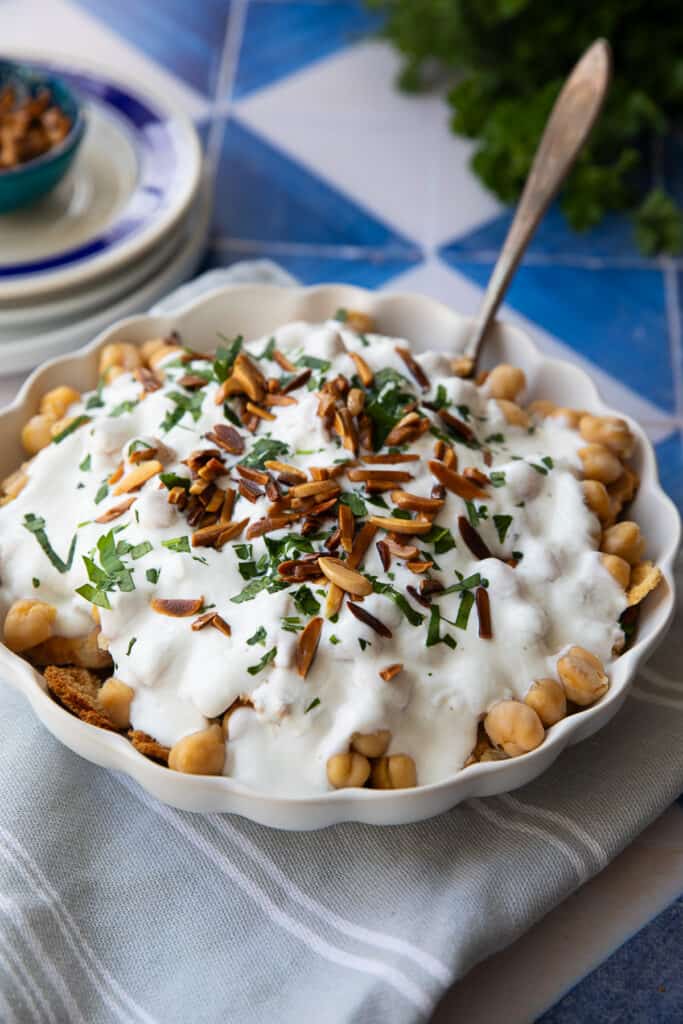
Fatteh is a generous Levantine dish made with crisp pita bread, warm chickpeas and a creamy yogurt, tahini, lemon and garlic sauce, finished with toasted pine nuts, parsley and spices. The contrast between crunchy bread, tender chickpeas and cool creamy sauce is essential to the dish.
 Meat
MeatShish Tawook is an iconic Levantine chicken skewer marinated in yogurt, lemon, garlic, oil and spices, then grilled over high heat. A good marinade tenderises the meat, promotes browning and produces juicy chicken with lightly caramelised edges.
 Vegan
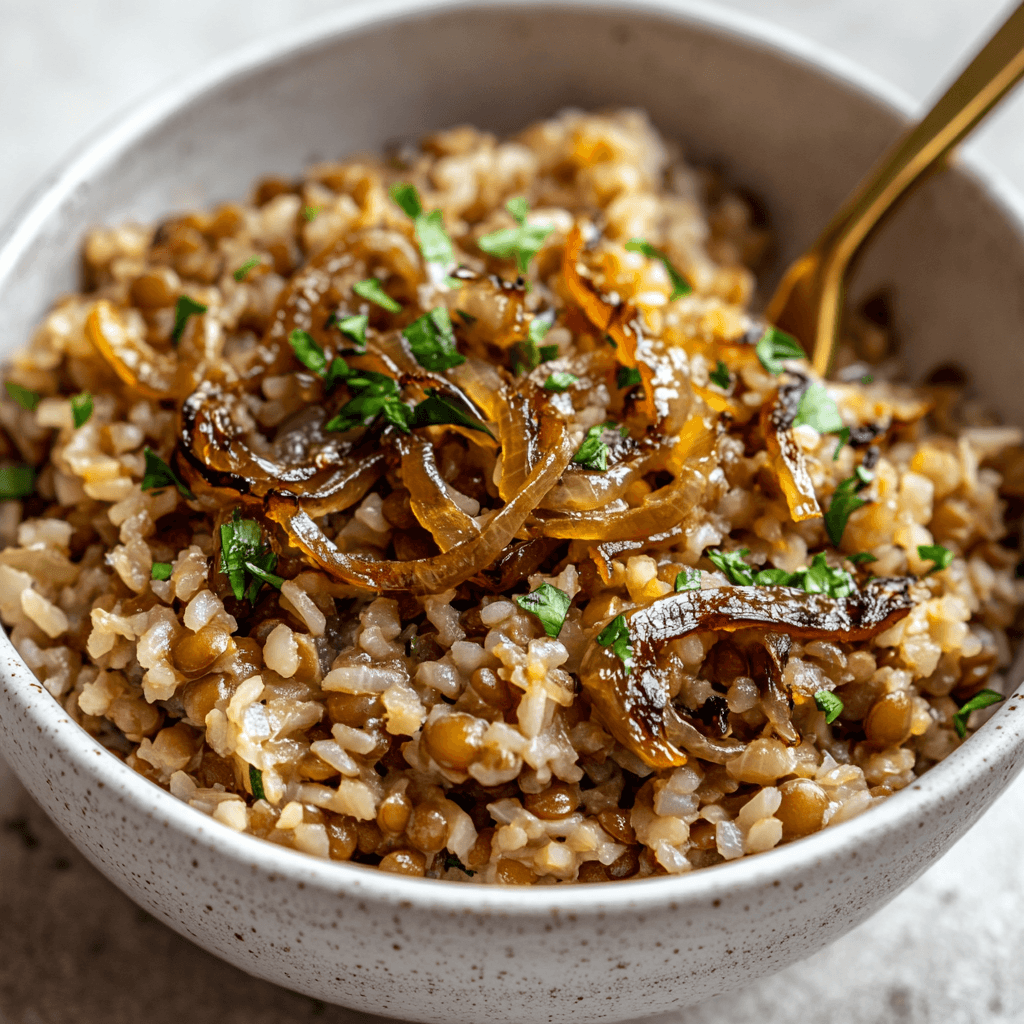
VeganMujaddara is a Levantine classic made with lentils, rice and deeply browned onions. Simple, nourishing and aromatic, it relies on the contrast between tender lentils, separate grains of rice and a generous amount of almost crisp caramelised onions.