Kafta / Kofta
Kafta, or kofta, is a highly aromatic minced-meat preparation flavoured with onion, parsley and spices, shaped into elongated skewers or meatballs and grilled. This Levantine-style version combines beef and lamb for a juicy texture, well-caramelised exterior and pronounced parsley, cumin, coriander and allspice flavour.
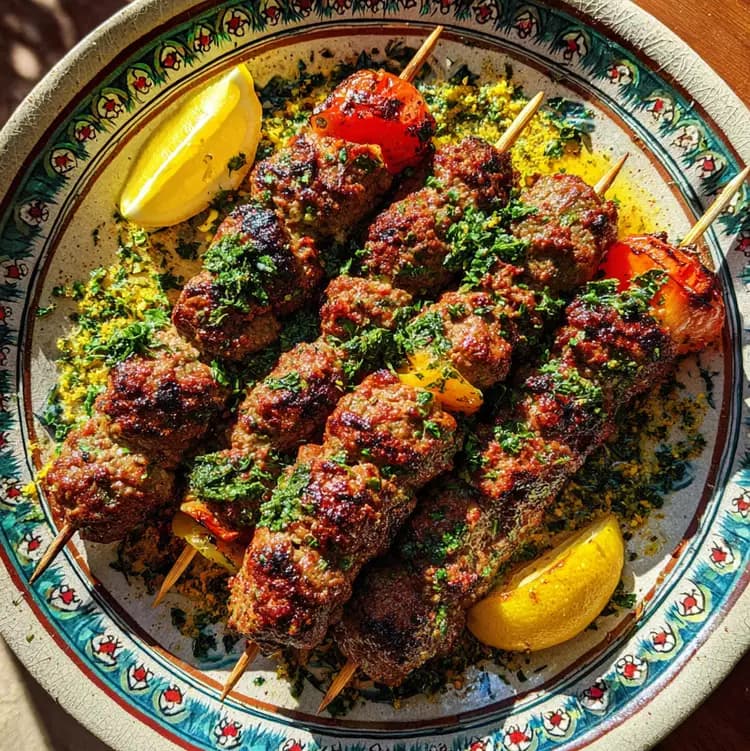
About 430 kcal per serving
Ingredients
- minced beef (about 15 to 20% fat)600 g
- minced lamb (with some fat)400 g
- large yellow onion (very finely chopped, then lightly squeezed)1 piece
- flat-leaf parsley (finely chopped)50 g
- fine salt (adjust to taste)10 g
- ground black pepper (preferably freshly ground)4 g
- ground cumin5 g
- ground coriander4 g
- allspice4 g
- sweet paprika (optional)2 g
- Aleppo pepper (optional)2 g
- olive oil (for lightly brushing before cooking)15 ml
Preparation
Prepare the onion
Chop the onion very finely with a knife or food processor. Place it in a fine sieve or clean cloth and squeeze lightly to remove excess juice without drying it out completely.
Prepare the parsley
Wash and thoroughly dry the parsley. Remove the thick stems and finely chop the leaves and tender small stems.
Mix the spices
In a small bowl, combine the salt, pepper, cumin, ground coriander, allspice, paprika and Aleppo pepper if using. Pre-mixing the spices helps distribute them evenly through the meat.
Combine the meats
Place the minced beef and lamb in a large cold bowl. Mix them loosely with your fingers to distribute the two meats without compacting them yet.
Add aromatics and spices
Add the squeezed onion, parsley and spice mixture. Mix by hand for two to three minutes, folding the meat over itself until everything is evenly distributed.
Develop cohesion
Continue kneading briefly until the mixture becomes slightly sticky and can hold together in a ball. Avoid overworking the meat, which would produce a dense texture after cooking.
Test the seasoning
Take a small spoonful of the mixture, cook it quickly in a hot pan and taste. Adjust the salt, pepper or spices in the raw mixture if necessary.
Chill the mixture
Cover the bowl and refrigerate the mixture for thirty to forty-five minutes. Chilling firms the fat and makes shaping much easier.
Prepare the skewers
Preferably use wide metal skewers. If using wooden skewers, soak them for at least thirty minutes so they are less likely to burn.
Divide the mixture
Divide the meat into twelve even portions of about eighty to eighty-five grams. Quickly shape each portion into a ball without compressing it too firmly.
Shape around the skewers
Lightly dampen your hands. Press one portion of meat around a skewer and gradually elongate it over twelve to fifteen centimetres, keeping it about two centimetres thick.
Even out the shape
Press the surface with your fingers to remove cracks and distribute the meat evenly. Tighten the ends slightly around the skewer so they do not come loose.
Chill once more
Place the shaped skewers on a tray and refrigerate for another fifteen to twenty minutes while the grill heats. This further improves their stability.
Preheat the grill
Heat the barbecue or grill over high heat. The grate should be very hot before adding the kafta. Clean and very lightly oil the grate if necessary to reduce sticking.
Brush lightly with oil
Brush the kafta with a very thin layer of olive oil. Do not saturate them; the goal is simply to encourage surface browning.
Sear the first side
Place the skewers on the very hot grill and leave them undisturbed for about three minutes. A crust should form before attempting to turn them.
Grill all sides
Turn the skewers and continue cooking for about eight to twelve minutes total depending on thickness, rotating regularly. The surfaces should be well browned with some lightly charred areas.
Check doneness
For a minced-meat preparation, aim for about 71°C internally. The kafta should be fully cooked but still juicy, without unnecessary prolonged cooking.
Rest the kafta
Remove the skewers from the grill and rest for five minutes on a warm platter. This short rest helps retain more juices in the meat.
Serve
Serve the kafta hot with pita bread, hummus, tahini sauce, tabbouleh, fattoush, grilled tomatoes, onions or pickles. They can be eaten directly from the skewer or removed to fill flatbread.
Tips & tricks
- Use meat with some fat so the kafta does not become dry.
- Chop the onion very finely, then remove some of its juice so the mixture is not too wet.
- Dry the parsley thoroughly after washing before chopping.
- Mix the meat only enough to develop cohesion without making it dense.
- Refrigerate the mixture for thirty minutes before shaping so it holds better on skewers.
- Lightly wet your hands while shaping to prevent sticking.
- Shape the kafta to an even thickness for consistent cooking.
- Press the meat firmly around the skewers so it does not fall off during cooking.
- Cook over a very hot grill to sear the exterior quickly.
- Turn the skewers only once the first side is well seared.
- Avoid overcooking; the meat should remain juicy.
- Let the kafta rest for a few minutes after cooking before serving.
Variations
- Use only beef for a leaner version.
- Use only lamb for a stronger flavour.
- Add a pinch of cinnamon to the mixture.
- Add Aleppo pepper or cayenne for a spicier version.
- Shape the mixture into meatballs rather than skewers.
- Cook the kafta under the oven grill when a barbecue is not available.
- Add toasted pine nuts to the mixture.
- Serve with tahini sauce, hummus or garlic yogurt.
Storage
Cooked kafta keeps for up to three days in the refrigerator in an airtight container. Reheat briefly in a frying pan, in a 170°C oven or over a moderate grill so the meat does not dry out. The raw mixture can be refrigerated for up to twenty-four hours. Shaped uncooked kafta can be frozen for up to two months, separated with baking paper.
Nutrition facts(per serving)
| Calories | 430 kcal |
|---|---|
| Protein | 34 g |
| Carbs | 8 g |
| Fat | 29 g |
| Fiber | 2 g |
| Sugars | 3 g |
What to serve with this recipe?
- Pita bread
- Hummus
- Lebanese tabbouleh
- Fattoush
Frequently asked questions
Reviews
No reviews yet. Be the first to leave one!
Similar recipes
 Vegetarian
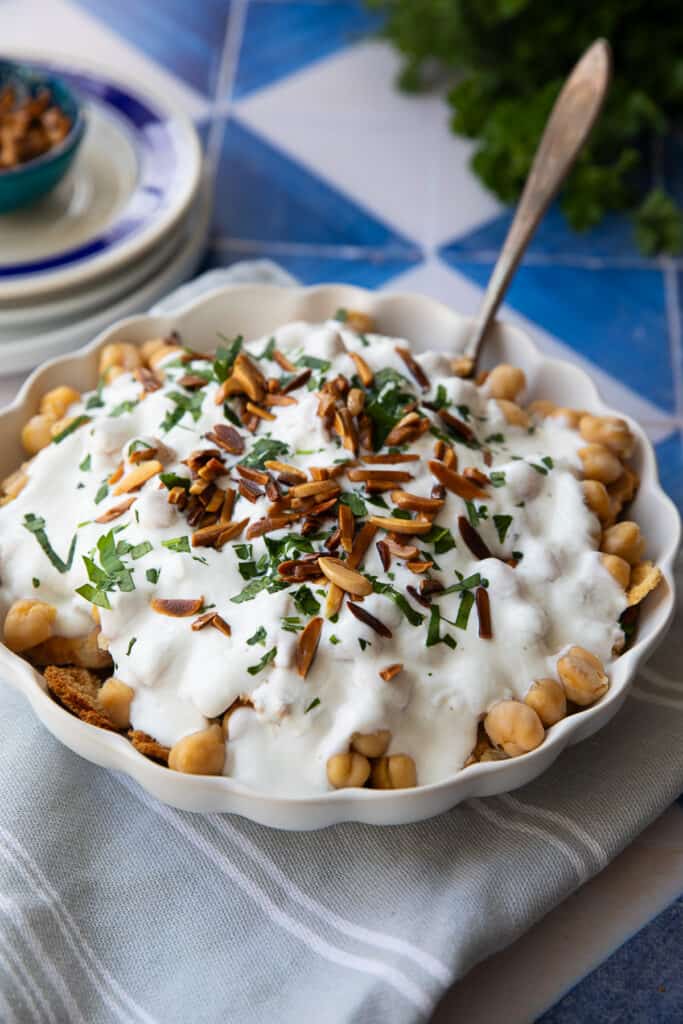
Fatteh is a generous Levantine dish made with crisp pita bread, warm chickpeas and a creamy yogurt, tahini, lemon and garlic sauce, finished with toasted pine nuts, parsley and spices. The contrast between crunchy bread, tender chickpeas and cool creamy sauce is essential to the dish.
 Meat
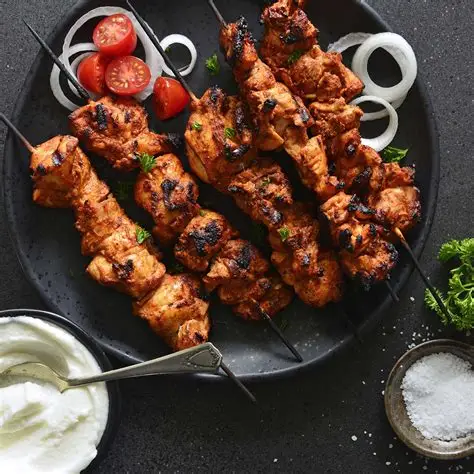
MeatShish Tawook is an iconic Levantine chicken skewer marinated in yogurt, lemon, garlic, oil and spices, then grilled over high heat. A good marinade tenderises the meat, promotes browning and produces juicy chicken with lightly caramelised edges.
 Vegan
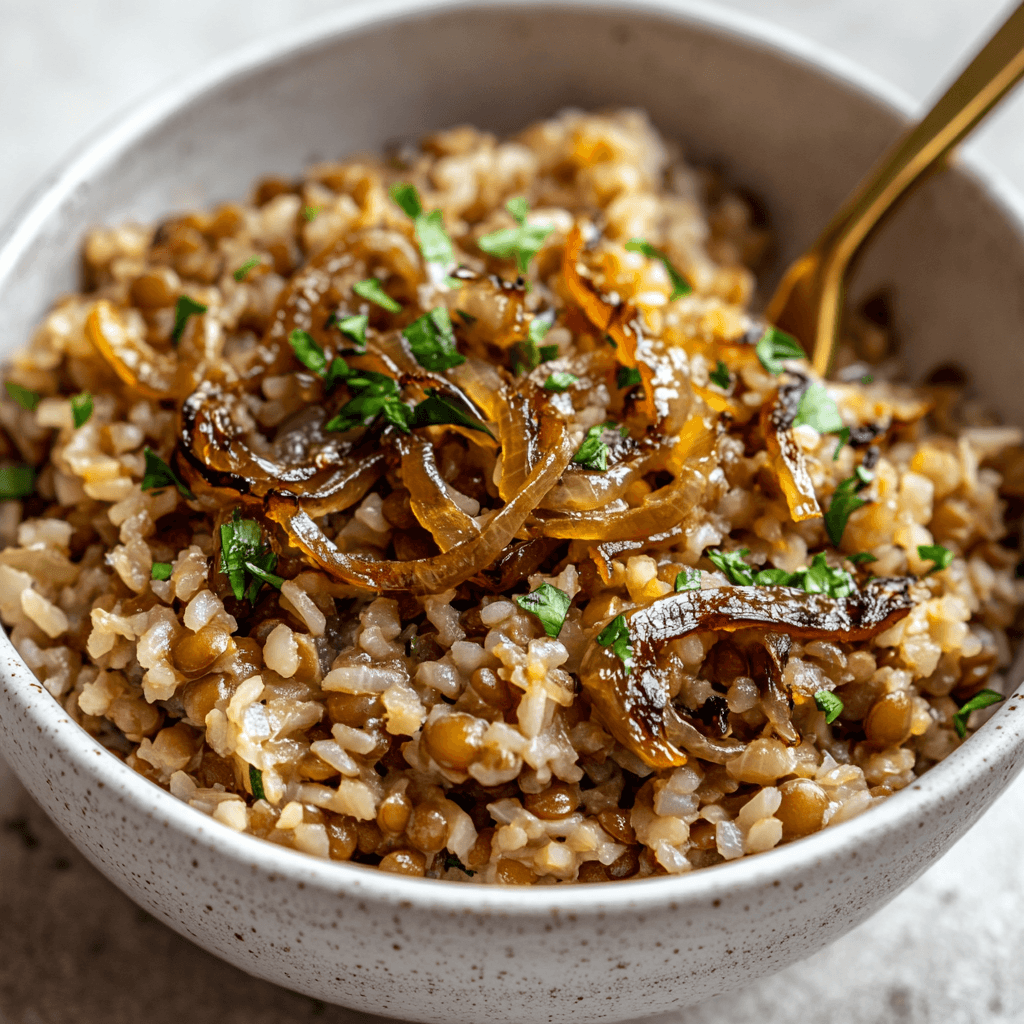
VeganMujaddara is a Levantine classic made with lentils, rice and deeply browned onions. Simple, nourishing and aromatic, it relies on the contrast between tender lentils, separate grains of rice and a generous amount of almost crisp caramelised onions.