Medovik Honey Cake (Медовик)
Medovik is a Russian honey cake made from multiple very thin honey cake layers assembled with a smooth sour cream and whipped cream filling. After several hours of resting, the layers absorb moisture from the cream and become incredibly tender, creating the cake's signature melt-in-the-mouth texture and deep caramelised honey flavour.
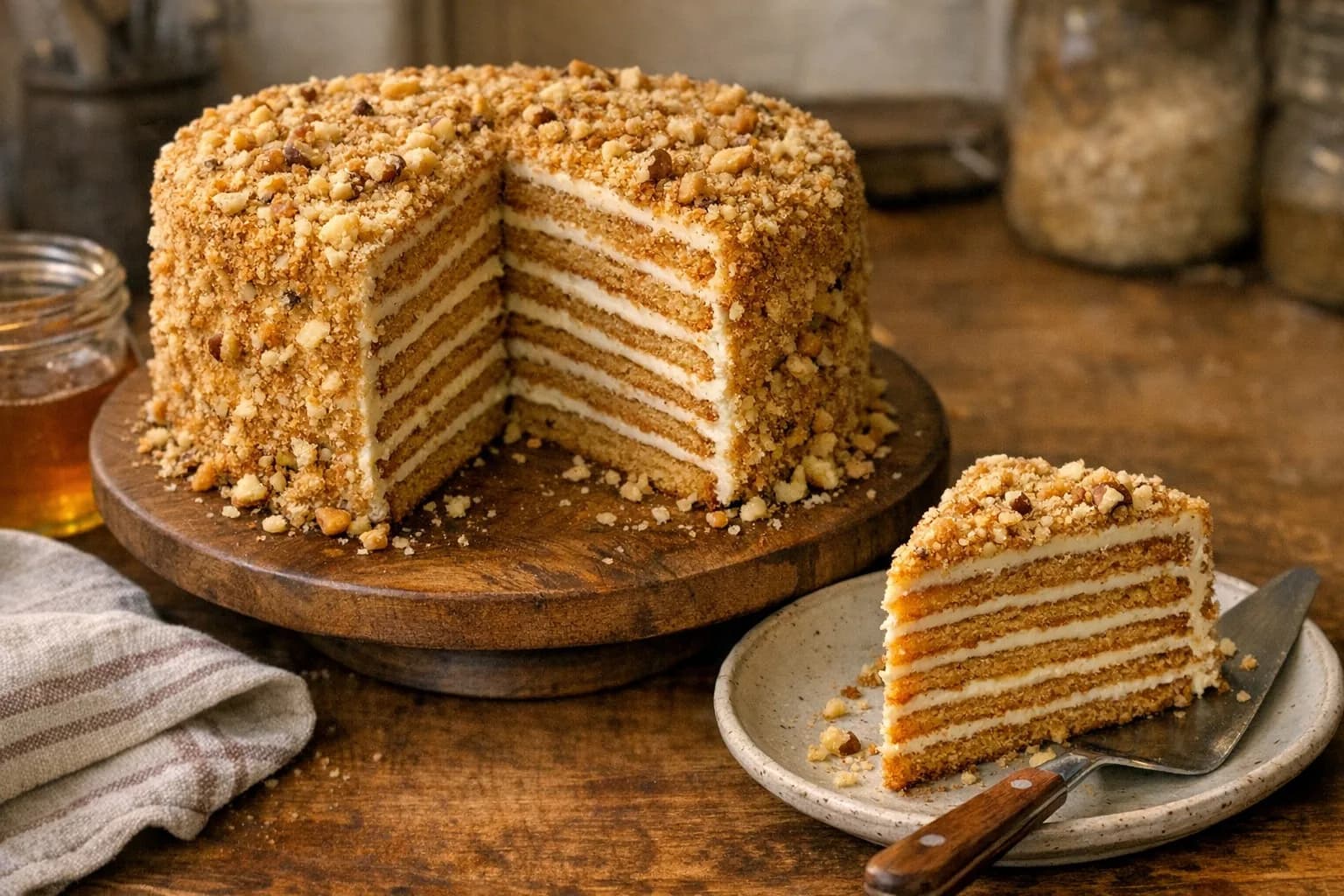
About 510 kcal per serving
Ingredients
- honey (preferably floral or buckwheat honey depending on desired intensity)160 g
- sugar (for the cake layers)180 g
- butter (cut into small pieces)120 g
- eggs (at room temperature, lightly beaten)3 pieces
- baking soda (for leavening the layers)10 g
- wheat flour (approximately, add gradually depending on the dough texture)500 g
- fine salt2 g
- thick sour cream (very cold, ideally 25 to 30% fat)700 g
- heavy whipping cream (very cold, at least 30% fat)300 ml
- icing sugar (adjust to taste)120 g
- vanilla extract (optional)10 ml
- honey (optional, to lightly flavour the cream)20 g
Preparation
Prepare the equipment
Preheat the oven to 180°C using conventional heat. Prepare several sheets of baking paper and a 20 to 22 cm cake ring or plate to use as a template. Weigh all ingredients before starting.
Heat the honey, sugar and butter
Place the honey, sugar and butter in a heavy-bottomed saucepan. Heat over low to medium heat, stirring constantly, until the butter has melted and the mixture is smooth. Avoid vigorous boiling.
Add the baking soda
Remove the saucepan from the heat, then add the baking soda. Whisk immediately. The mixture will foam vigorously, lighten in colour and then become slightly amber. Continue whisking for about thirty seconds.
Cool slightly
Let the honey mixture cool for three to five minutes, stirring occasionally. It should remain warm but no longer be scorching hot so the eggs do not scramble.
Add the eggs
Gradually add the beaten eggs while whisking constantly. Add them in three or four additions so they incorporate smoothly without curdling.
Form the dough
Add the salt, then about 400 g of flour. Mix with a spatula. Continue adding flour gradually until the dough is soft, warm and slightly sticky. It should not become stiff.
Divide the dough
Place the dough on a lightly floured surface and divide into eight equal portions. Shape into small balls and keep them covered while rolling so they do not dry out.
Roll the first layer
Place one dough ball on a lightly floured sheet of baking paper. Roll it very thinly into a disc slightly larger than the 20 to 22 cm template, about two to three millimetres thick.
Prick the dough
Prick the entire surface of the disc with a fork. This limits large bubbles and promotes more even baking.
Bake the layer
Slide the baking paper onto a tray and bake for four to six minutes. The layer should be evenly golden, slightly darker at the edges, but still somewhat flexible when it comes out of the oven.
Trim immediately
Immediately after baking, place the template over the hot layer and cut a neat circle with a knife. Reserve the trimmings. Work while the layer is still flexible because it firms as it cools.
Bake all the layers
Repeat the rolling, pricking, baking and trimming with the remaining seven portions. Let all eight layers cool completely on a rack or sheets of baking paper.
Prepare the crumbs
Place all the cooled cake trimmings in a food processor and grind into fine crumbs. Without a processor, place them in a strong bag and crush them with a rolling pin.
Start the cream filling
Pour the very cold heavy cream into a chilled large bowl. Whip until soft peaks form. Do not whip to a very stiff texture because it still needs to be mixed with the sour cream.
Mix the sour cream
In another bowl, mix the cold sour cream with the icing sugar, vanilla and optional 20 g honey. Whisk only until the sugar is dissolved and the mixture is smooth.
Finish the cream filling
Gently fold the whipped cream into the sour cream mixture in three additions using a spatula. The finished filling should be thick, supple and easy to spread without running excessively.
Assemble the cake
Place the first cake layer on a serving plate. Spread an even layer of cream about three to four millimetres thick over it. Add a second layer and repeat until all cake layers are used.
Coat the top and sides
Cover the top of the cake with the remaining cream, then smooth the sides with a spatula. A perfectly even coating is not essential because it will be covered with crumbs.
Add the crumbs
Generously coat the top and sides with the cake crumbs. Press very lightly with your hand or a spatula so they adhere to the cream.
Let the cake mature
Cover the cake without pressing on the surface and refrigerate for at least eight hours, ideally twelve to twenty-four hours. This step is essential: moisture from the cream must penetrate the cake layers to create the characteristic tender texture.
Slice cleanly
Take the Medovik out of the refrigerator ten to fifteen minutes before serving. Use a long thin knife warmed under hot water and wiped between cuts for clean slices.
Tips & tricks
- Weigh all ingredients before starting because honey dough needs to be worked quickly.
- Heat the honey, sugar and butter gently to avoid burning the honey.
- Add the baking soda off the heat or over very low heat because the mixture foams quickly.
- Let the honey base cool slightly before adding the eggs so they do not scramble.
- Add the flour gradually; too much flour will make the layers dry.
- Roll each disc very thinly, about two to three millimetres.
- Prick the discs with a fork to reduce large bubbles during baking.
- Bake the layers very briefly; they should be golden but still slightly flexible when removed from the oven.
- Trim the discs to size immediately after baking while they are still soft.
- Keep the baked trimmings to make the crumb coating.
- Use thick, well-chilled sour cream so the filling is not too runny.
- Let the cake rest for at least eight hours, ideally overnight, before slicing.
Variations
- Add a little lemon zest to the cream for a fresher note.
- Replace part of the sour cream with mascarpone for a richer filling.
- Add finely chopped walnuts between some of the layers.
- Use buckwheat honey for a stronger flavour.
- Add a thin layer of apricot jam between two layers.
- Flavour the cream with a small amount of vanilla.
- Add dulce de leche to part of the cream for a more caramelised version.
- Decorate with toasted nuts, cake crumbs or fine drizzles of honey.
Storage
Medovik keeps for up to four days in the refrigerator, well covered so it does not absorb odours. Its texture is often best after twelve to twenty-four hours of resting. It can be frozen for up to one month, whole or sliced, tightly wrapped. Thaw slowly overnight in the refrigerator. Avoid leaving it at room temperature for long because of the cream filling.
Nutrition facts(per serving)
| Calories | 510 kcal |
|---|---|
| Protein | 8 g |
| Carbs | 61 g |
| Fat | 27 g |
| Fiber | 1 g |
| Sugars | 39 g |
What to serve with this recipe?
- Black tea
- Coffee
- Berries
- Toasted walnuts
Frequently asked questions
Reviews
No reviews yet. Be the first to leave one!
Similar recipes
 Vegetarian
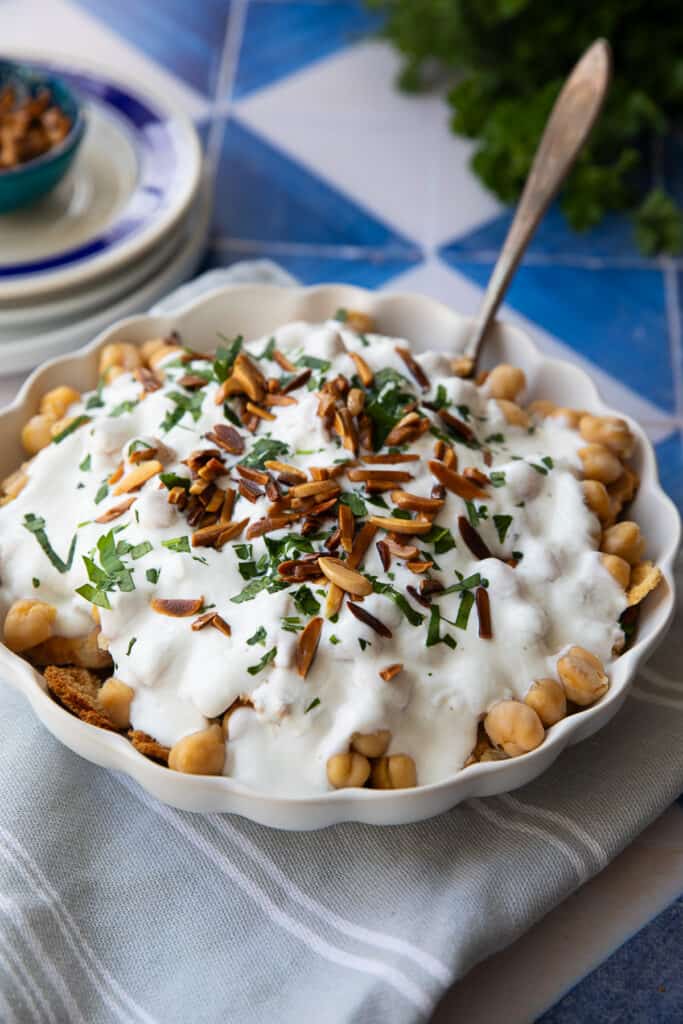
Fatteh is a generous Levantine dish made with crisp pita bread, warm chickpeas and a creamy yogurt, tahini, lemon and garlic sauce, finished with toasted pine nuts, parsley and spices. The contrast between crunchy bread, tender chickpeas and cool creamy sauce is essential to the dish.
 Meat
MeatShish Tawook is an iconic Levantine chicken skewer marinated in yogurt, lemon, garlic, oil and spices, then grilled over high heat. A good marinade tenderises the meat, promotes browning and produces juicy chicken with lightly caramelised edges.
 Vegan
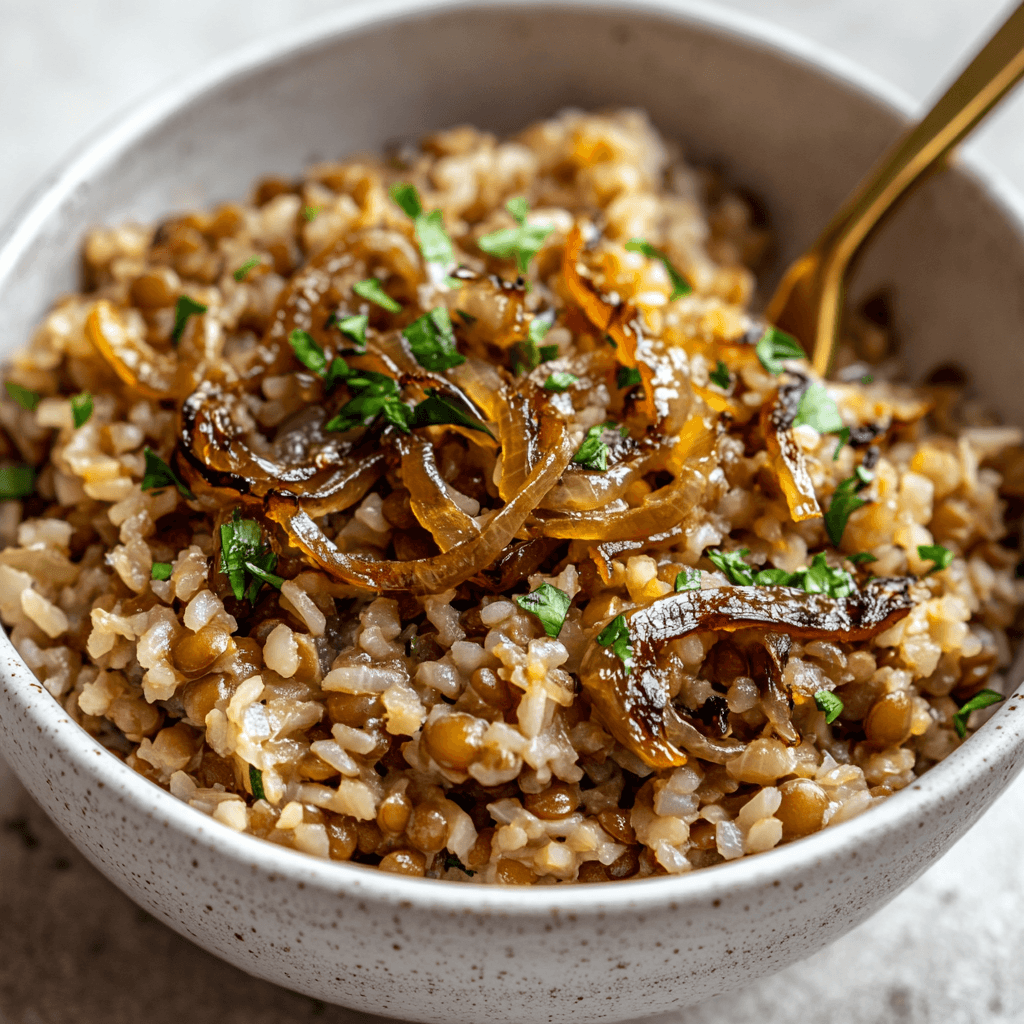
VeganMujaddara is a Levantine classic made with lentils, rice and deeply browned onions. Simple, nourishing and aromatic, it relies on the contrast between tender lentils, separate grains of rice and a generous amount of almost crisp caramelised onions.