Milanese-style osso buco
A classic Lombard dish made with thick cross-cut veal shanks containing marrow bone, lightly floured, browned and slowly braised with vegetables, white wine and stock. The meat becomes meltingly tender while the sauce reduces and deepens in flavour. A fresh lemon, garlic and parsley gremolata balances the richness just before serving.
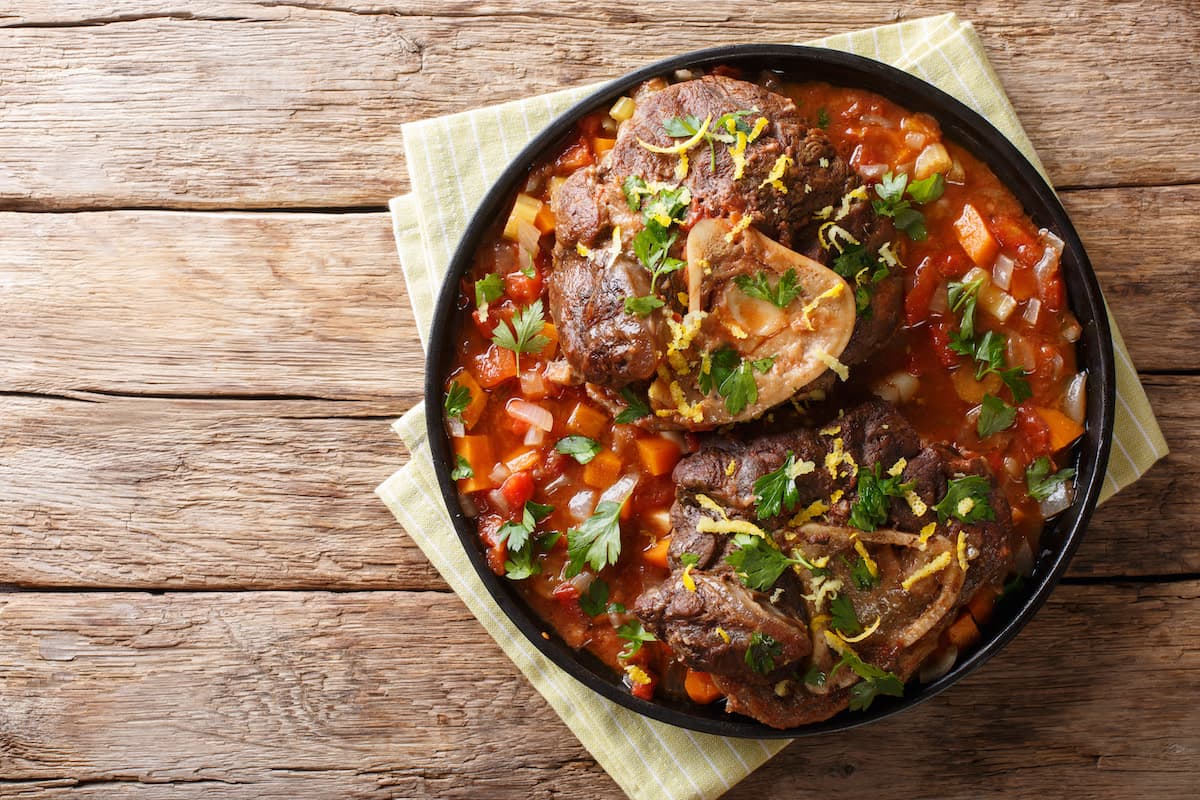
About 615 kcal per serving
Ingredients
- bone-in veal shank slices (about 300 g each and 4 to 5 cm thick)4 pieces
- wheat flour (for lightly coating the meat)40 g
- butter30 g
- olive oil30 ml
- yellow onion (finely chopped)1 piece
- carrots (cut into small dice)2 pieces
- celery stalks (cut into small dice)2 pieces
- garlic cloves (one for the sauce and one for the gremolata)2 pieces
- dry white wine180 ml
- chopped peeled tomatoes400 g
- veal stock (hot and lightly salted)500 ml
- bay leaf1 piece
- thyme sprigs2 pieces
- unwaxed lemon (finely grated zest for the gremolata)1 piece
- flat-leaf parsley (finely chopped)20 g
- fine salt (adjust according to the stock)6 g
- ground black pepper2 g
Preparation
Prepare the veal shanks
Remove the veal shanks from the refrigerator twenty minutes before cooking. Pat them thoroughly dry. Make three or four shallow cuts in the outer membrane of each slice without cutting deeply into the meat. Season both sides with salt and pepper, coat with a very thin layer of flour and shake off the excess.
Brown the meat
Heat the olive oil and twenty grams of butter in a large heavy casserole over medium-high heat. Brown the shank slices for four to five minutes on each side until deeply golden. Work in batches if necessary, then set the meat aside.
Prepare the soffritto
Reduce the heat to medium. Add the onion, carrots, celery and one finely chopped garlic clove. Add the remaining butter if the casserole looks dry. Cook for eight to ten minutes, stirring regularly, until the vegetables are tender and lightly golden.
Deglaze with white wine
Pour in the white wine and scrape the bottom of the casserole with a wooden spoon to dissolve the browned bits. Simmer for five to seven minutes, until the liquid has reduced by about two-thirds and the smell of raw alcohol has disappeared.
Build the sauce
Add the chopped tomatoes, hot stock, bay leaf and thyme. Stir and bring to a gentle simmer. Taste and adjust the seasoning lightly, as the sauce will become more concentrated during cooking.
Braise slowly
Return the shank slices to the casserole in a single layer. The liquid should reach about two-thirds of their height. Partially cover and braise over very low heat for about two hours. Carefully turn the pieces after one hour and add a little hot stock if the sauce reduces too quickly.
Check the cooking
The meat is ready when a thin knife slides easily into the thickest part and the flesh begins to pull away from the bone without falling off completely. If it still feels firm, continue cooking for another fifteen to thirty minutes. Carefully remove the shanks and keep them warm.
Reduce the sauce
Remove the bay leaf and thyme. Simmer the sauce uncovered for ten to fifteen minutes so it thickens slightly. Crush some of the vegetables with the back of a spoon if a more cohesive texture is desired. Taste and adjust the salt and pepper.
Prepare the gremolata
Combine the finely chopped parsley, lemon zest and the second garlic clove, grated or minced very finely. Prepare this mixture just before serving so it remains fresh and aromatic.
Plate and serve
Return the shanks to the sauce for two to three minutes to reheat. Place one slice on each plate with a generous amount of sauce and vegetables. Sprinkle with gremolata at the last moment and serve immediately.
Tips & tricks
- Choose veal shank slices four to five centimetres thick so they stay moist during the long cooking time.
- Make a few shallow cuts in the outer membrane around each slice to prevent the meat from curling as it cooks.
- Pat the meat thoroughly dry before flouring so it browns evenly.
- Do not overcrowd the casserole; brown the shanks in batches if necessary.
- Allow the wine to reduce almost completely before adding stock to avoid an overly acidic sauce.
- Keep the braise at a very gentle simmer throughout cooking, as vigorous boiling can toughen the meat.
- Turn the shanks carefully halfway through cooking so the meat does not detach from the bone.
- Prepare the gremolata at the last moment to preserve the aroma of the lemon, garlic and parsley.
- Serve with risotto alla milanese, creamy polenta or steamed potatoes.
Variations
- Prepare a white version without tomato, closer to some older Milanese recipes.
- Replace the veal with beef shank and extend the cooking time by thirty to forty-five minutes.
- Add a small strip of orange zest to the sauce for a more aromatic note.
- Use homemade veal stock for a deeper, more gelatinous sauce.
- Add a few sage leaves with the thyme for a more herbaceous variation.
Storage
Osso buco keeps for up to three days in the refrigerator in an airtight container, ideally covered with its sauce. Cool it promptly before refrigerating. Reheat gently, covered, in a casserole with a small amount of stock or water so the meat does not dry out. Store the gremolata separately and add it only when serving. The dish can be frozen for up to two months without the gremolata.
Nutrition facts(per serving)
| Calories | 615 kcal |
|---|---|
| Protein | 52 g |
| Carbs | 21 g |
| Fat | 34 g |
| Fiber | 4 g |
| Sugars | 7 g |
What to serve with this recipe?
- Risotto alla milanese
- Creamy polenta
- Mashed potatoes
- Parsley green beans
Frequently asked questions
Reviews
No reviews yet. Be the first to leave one!
Similar recipes
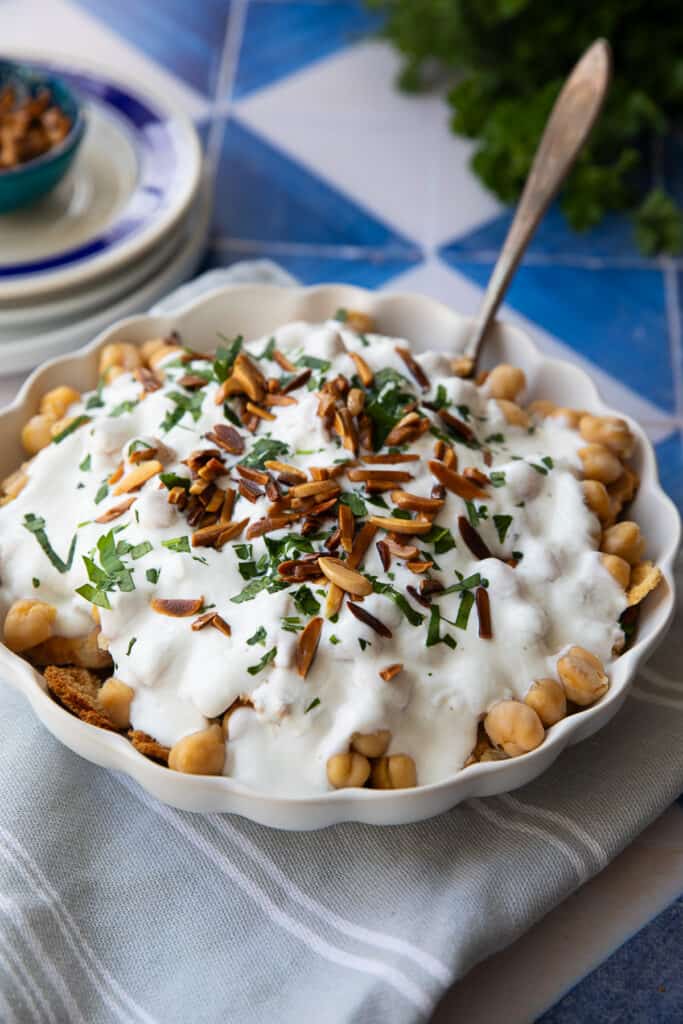 Vegetarian
Fatteh is a generous Levantine dish made with crisp pita bread, warm chickpeas and a creamy yogurt, tahini, lemon and garlic sauce, finished with toasted pine nuts, parsley and spices. The contrast between crunchy bread, tender chickpeas and cool creamy sauce is essential to the dish.
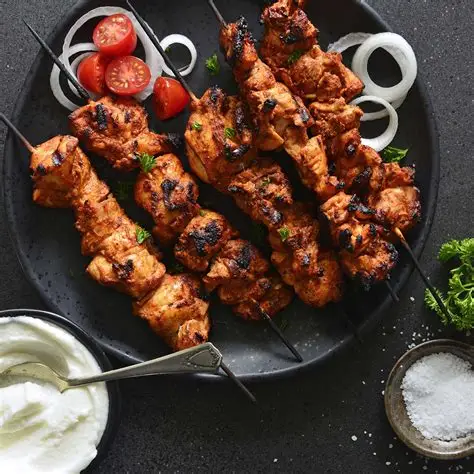 Meat
MeatShish Tawook is an iconic Levantine chicken skewer marinated in yogurt, lemon, garlic, oil and spices, then grilled over high heat. A good marinade tenderises the meat, promotes browning and produces juicy chicken with lightly caramelised edges.
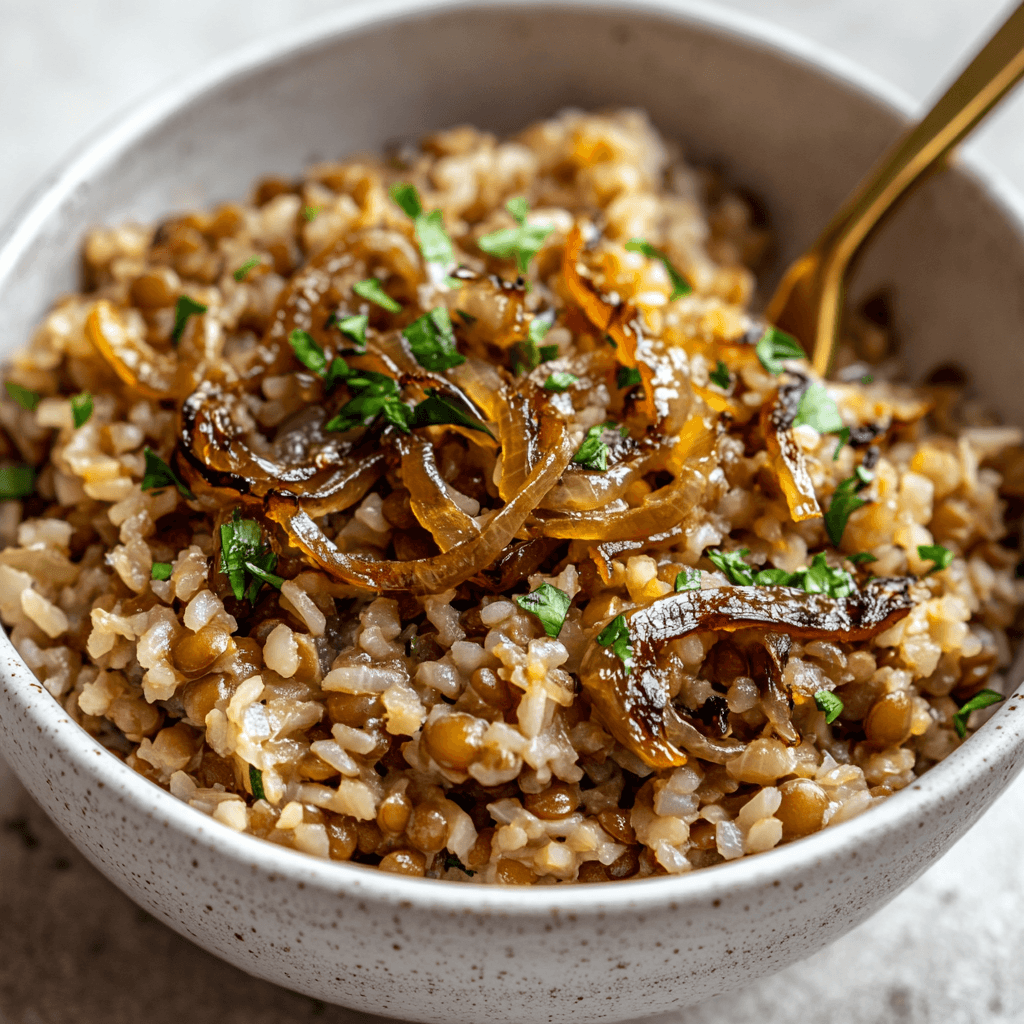 Vegan
VeganMujaddara is a Levantine classic made with lentils, rice and deeply browned onions. Simple, nourishing and aromatic, it relies on the contrast between tender lentils, separate grains of rice and a generous amount of almost crisp caramelised onions.