Sauerbraten
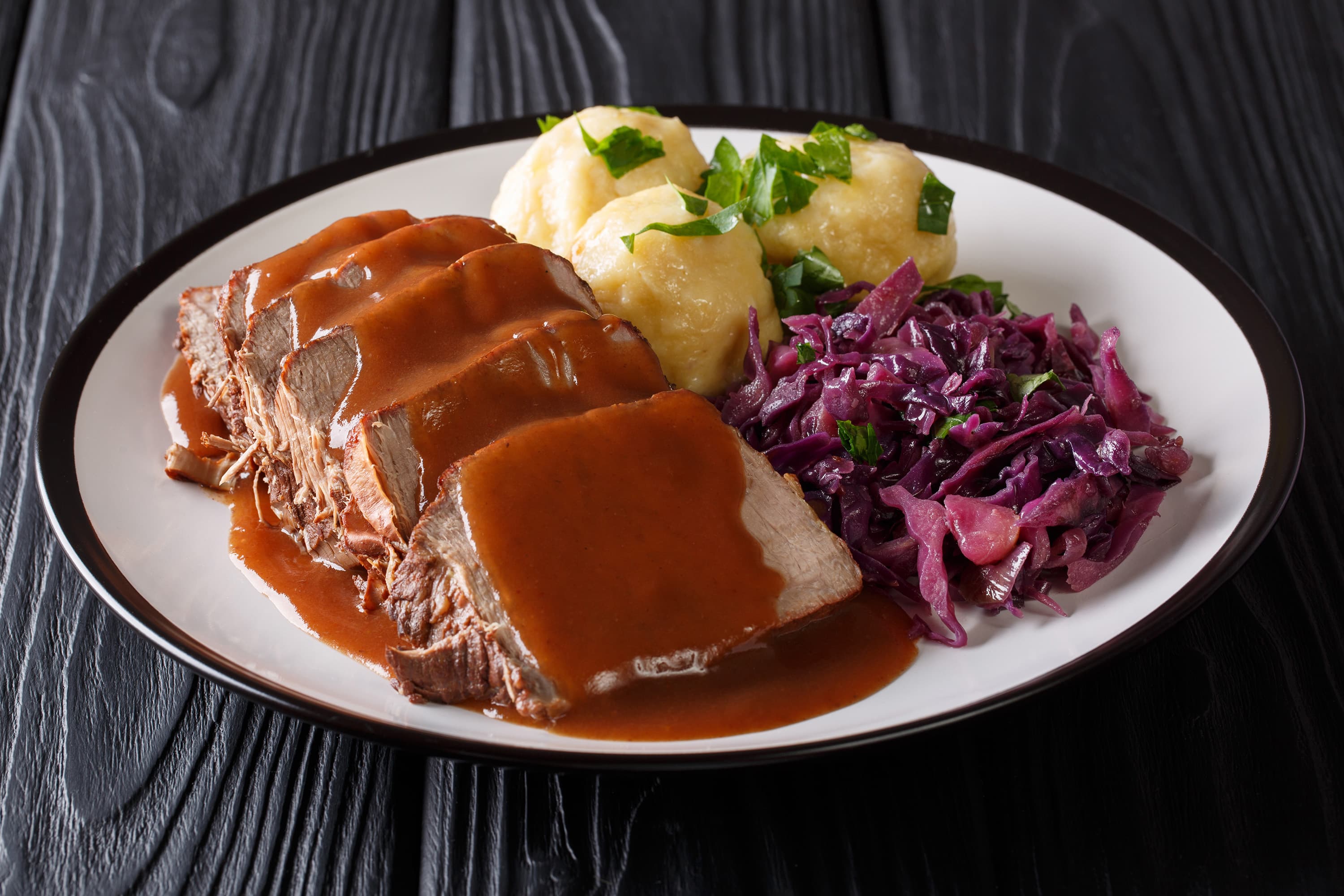
A German beef pot roast marinated for several days in a sweet-and-sour mixture of red wine, vinegar, vegetables and spices, then slowly braised until very tender. The marinade is transformed into a deep, gently tangy sauce, traditionally thickened with gingerbread or spiced biscuits.
About 570 kcal per serving
Ingredients
- braising beef roast (chuck, shoulder or bottom round)1 500 g
- dry red wine (for the marinade)500 ml
- red wine vinegar (for the marinade)250 ml
- water (for the marinade)250 ml
- yellow onions (sliced)2 pieces
- carrots (sliced into rounds)2 pieces
- celery stalks (cut into pieces)2 pieces
- bay leaves3 pieces
- juniper berries (lightly crushed)8 pieces
- black peppercorns10 pieces
- whole cloves5 pieces
- vegetable oil (for searing the meat)30 ml
- tomato paste30 g
- beef stock (hot and lightly salted)500 ml
- gingerbread (crumbled, for thickening the sauce)80 g
- brown sugar (adjust according to acidity)25 g
- redcurrant jelly (optional)20 g
- fine salt (adjust according to the stock)8 g
- ground black pepper2 g
Preparation
Prepare the marinade
Pour the red wine, vinegar and water into a large saucepan. Add the onions, carrots, celery, bay leaves, juniper berries, peppercorns and cloves. Bring to a gentle boil for five minutes, then remove from the heat and allow to cool completely.
Marinate the meat
Place the roast in a deep, non-reactive container. Pour the cold marinade and vegetables over the meat. The roast should be almost completely submerged. Cover tightly and refrigerate.
Marinate for several days
Leave the meat to marinate in the refrigerator for three to five days. Turn it once or twice each day with clean utensils so every side remains in contact with the marinade.
Drain and dry the roast
Remove the roast from the marinade and pat it very thoroughly dry. Strain the marinade, keeping the liquid and vegetables separate. Remove the whole spices if a smoother sauce is desired.
Sear the meat
Season the roast lightly with salt and pepper. Heat the oil in a large heavy casserole over medium-high heat. Brown the meat on all sides for ten to twelve minutes in total, then set it aside.
Cook the vegetables
Add the reserved marinade vegetables to the casserole. Cook for eight to ten minutes, stirring regularly, until lightly browned and some of their moisture has evaporated.
Add the tomato paste
Stir the tomato paste into the vegetables and cook for two minutes while stirring. It should darken slightly without burning.
Assemble the braise
Pour about 600 millilitres of strained marinade into the casserole and scrape up the browned bits. Add the hot stock, then return the roast. The liquid should reach about two-thirds of the way up the meat.
Braise slowly
Bring to a very gentle simmer, cover and cook for about three hours over very low heat or in a preheated 160°C oven. Turn the roast every forty-five minutes. The meat is ready when a knife slides in easily.
Rest the meat
Remove the roast from the casserole, cover loosely with foil and rest for fifteen to twenty minutes. This makes slicing easier and limits the loss of juices.
Prepare the sauce
Remove the bay leaves and any remaining whole spices. Blend the liquid and vegetables until smooth, then strain if desired. Return the sauce to the casserole and add the gingerbread, brown sugar and optional redcurrant jelly.
Reduce and balance the sauce
Simmer the sauce uncovered for ten to fifteen minutes, until it coats the back of a spoon. Add a little sugar if too acidic or a small amount of vinegar if too sweet. Adjust the salt and pepper.
Slice and serve
Slice the roast across the grain into portions about one centimetre thick. Return the slices to the sauce for a few minutes to reheat without boiling. Serve with potato dumplings, spaetzle or braised red cabbage.
Tips & tricks
- Choose a beef cut suited to braising, such as chuck, shoulder or bottom round.
- Use a non-reactive glass, ceramic or stainless-steel container for the marinade.
- Turn the meat once or twice a day so it marinates evenly.
- Marinate for at least three days and up to five days for a deeper flavour.
- Pat the meat thoroughly dry before searing to obtain a deep brown crust.
- Strain the marinade before cooking and keep the vegetables and liquid separate.
- Maintain a very gentle simmer during braising to prevent the meat from becoming tough.
- Let the roast rest before slicing so it retains its juices.
- Add the gingerbread gradually because the sauce continues to thicken as it reduces.
- Preparing the dish one day ahead allows the flavours to develop further.
Variations
- Replace part of the red wine with dark beer for a maltier flavour.
- Add raisins to the sauce to strengthen the sweet-and-sour contrast.
- Use speculoos biscuits instead of gingerbread to thicken the sauce.
- Add a spoonful of redcurrant jelly for a fruitier sauce.
- Prepare the dish with pork or game according to regional traditions.
- Replace the beef stock with veal stock for a milder sauce.
Storage
Cooked Sauerbraten keeps for up to three days in the refrigerator in an airtight container, preferably with the meat covered in sauce. Cool it promptly before refrigerating. Reheat gently, covered, over low heat or in a 160°C oven with some sauce. It can be frozen for up to three months, sliced and covered with sauce. Raw meat in the marinade must remain refrigerated between 0 and 4°C at all times.
Nutrition facts(per serving)
| Calories | 570 kcal |
|---|---|
| Protein | 53 g |
| Carbs | 24 g |
| Fat | 25 g |
| Fiber | 3 g |
| Sugars | 11 g |
What to serve with this recipe?
- Spaetzle
- Braised red cabbage
- German dark beer
- Potato dumplings
Frequently asked questions
Reviews
No reviews yet. Be the first to leave one!
Similar recipes
 Vegetarian
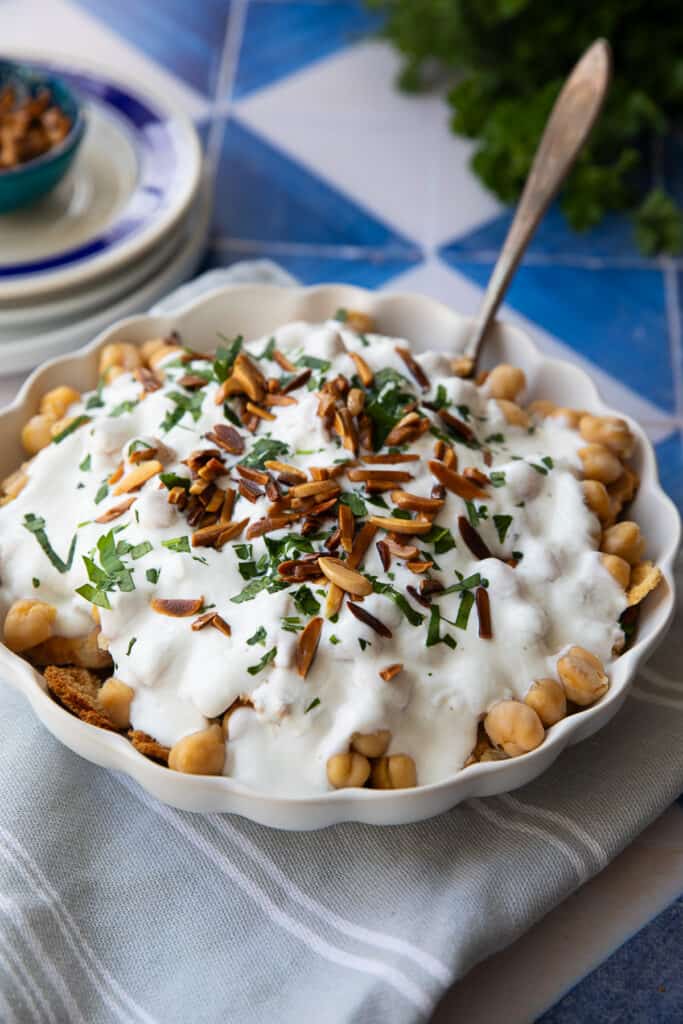
Fatteh is a generous Levantine dish made with crisp pita bread, warm chickpeas and a creamy yogurt, tahini, lemon and garlic sauce, finished with toasted pine nuts, parsley and spices. The contrast between crunchy bread, tender chickpeas and cool creamy sauce is essential to the dish.
 Meat
MeatShish Tawook is an iconic Levantine chicken skewer marinated in yogurt, lemon, garlic, oil and spices, then grilled over high heat. A good marinade tenderises the meat, promotes browning and produces juicy chicken with lightly caramelised edges.
 Vegan
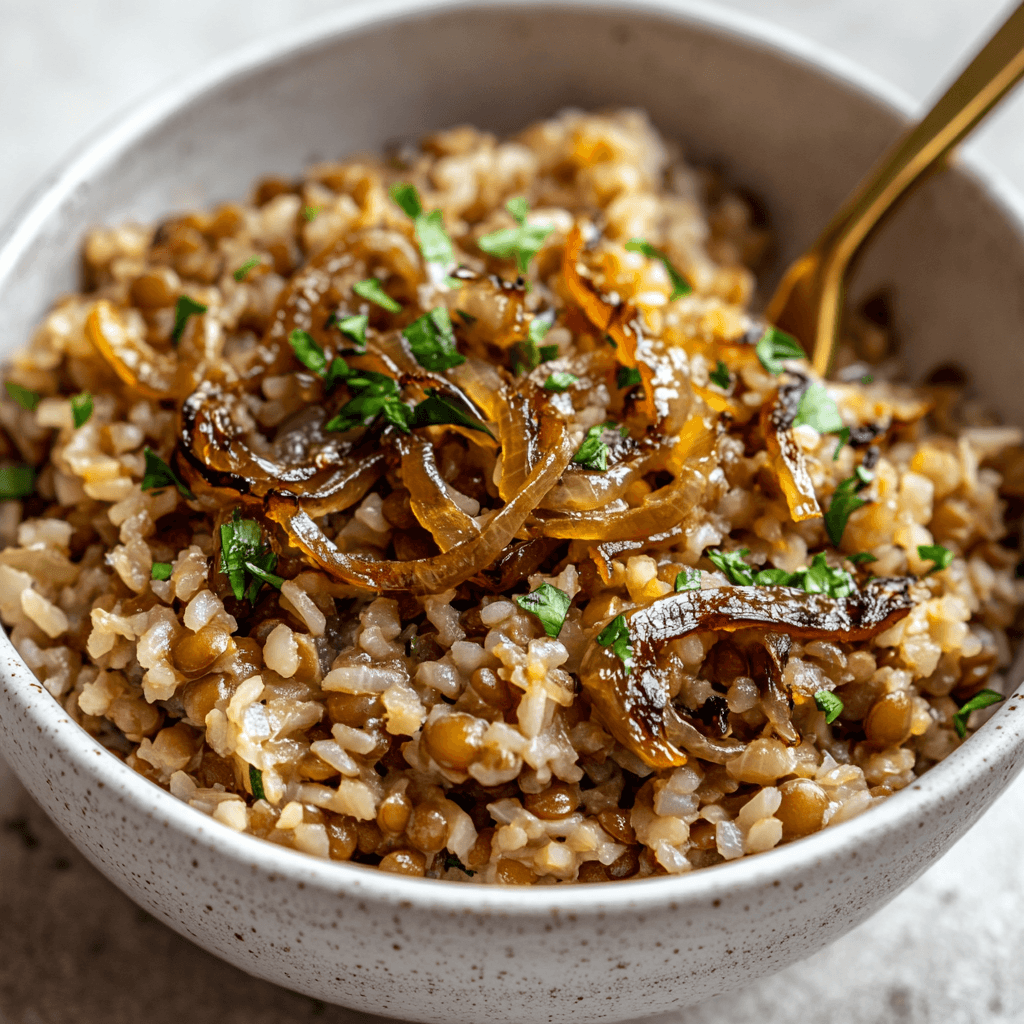
VeganMujaddara is a Levantine classic made with lentils, rice and deeply browned onions. Simple, nourishing and aromatic, it relies on the contrast between tender lentils, separate grains of rice and a generous amount of almost crisp caramelised onions.