Warak Enab – Stuffed Grape Leaves
Warak Enab is a Levantine classic: grape leaves rolled around a filling of rice, minced meat, tomato and spices, then slowly simmered with lemon, garlic and stock. Gentle cooking makes the leaves tender while the rice absorbs the aromatic juices.
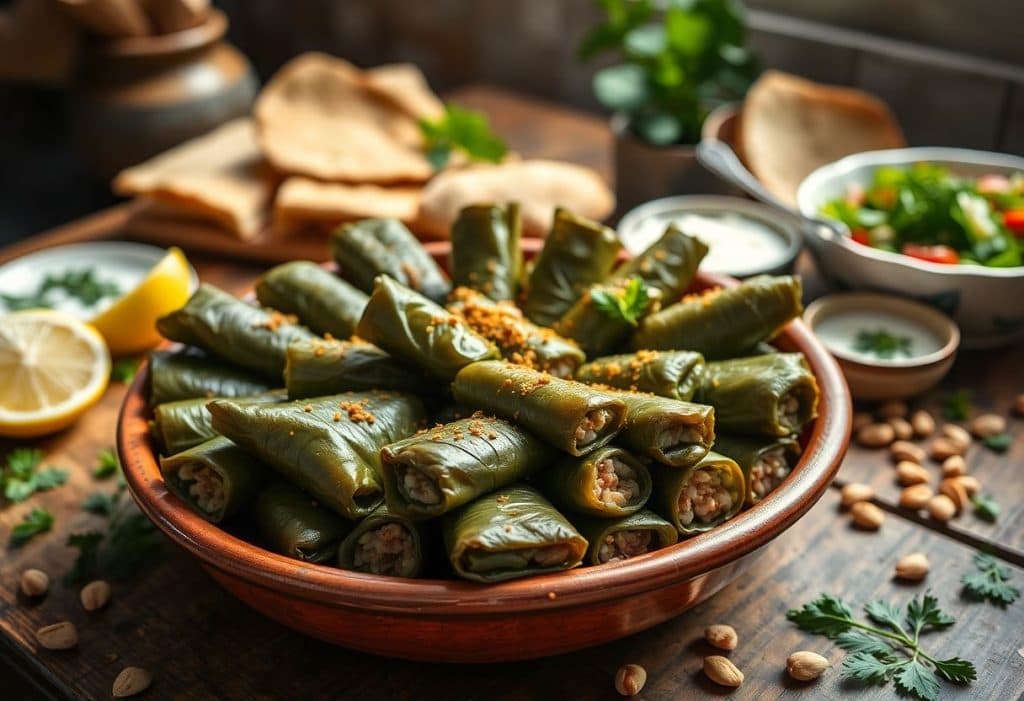
About 410 kcal per serving
Ingredients
- grape leaves (brined and rinsed, or fresh and blanched)60 pieces
- short- or medium-grain rice (rinsed several times and thoroughly drained)250 g
- minced beef or lamb (not excessively lean)350 g
- ripe tomatoes (finely diced)2 pieces
- small onion (very finely chopped)1 piece
- flat-leaf parsley (finely chopped)20 g
- fresh mint (finely chopped, optional)10 g
- fine salt (adjust according to the saltiness of the leaves)7 g
- ground black pepper3 g
- allspice (optional but recommended)3 g
- ground cinnamon (optional)1 g
- olive oil (for the filling and cooking)35 ml
- garlic cloves (peeled, whole or halved)5 pieces
- lemon juice (freshly squeezed)120 ml
- meat or vegetable stock (hot and lightly salted)750 ml
- tomatoes (sliced for lining the pot, optional)2 pieces
Preparation
Prepare the grape leaves
If using brined leaves, rinse several times and soak for ten minutes in fresh water. If using fresh leaves, blanch for thirty to sixty seconds in simmering water, then cool.
Drain and sort
Drain the leaves thoroughly and spread them on a towel. Reserve torn or very small leaves for lining the bottom of the pot.
Rinse the rice
Rinse the rice four to five times until the water is much clearer, then drain for at least ten minutes.
Prepare the filling
Combine the drained uncooked rice, minced meat, diced tomatoes, onion, parsley, mint, salt, pepper, allspice, cinnamon and about 15 ml olive oil.
Mix gently
Mix by hand for one to two minutes, just enough to distribute the ingredients. Do not compact the filling; the rice should remain loose among the meat.
Position a leaf
Place a leaf veined-side up with the pointed end facing away from you. Trim off the tough stem at the base if still present.
Add the filling
Place about one heaped teaspoon of filling near the base. Adjust the amount to the size of the leaf and leave enough room at the sides.
Fold the sides
Fold the base of the leaf over the filling, then fold both sides toward the centre to fully enclose it.
Roll
Roll toward the pointed end, keeping the shape even. The roll should be firm but not too tight so the rice has room to expand.
Repeat
Shape all the rolls in the same way and keep them as even in size as possible for uniform cooking.
Line the pot
Line the bottom of a wide pot with the reserved damaged leaves. Add the tomato slices if using and a few garlic cloves.
Arrange the rolls
Arrange the rolls side by side, seam-side down, packing them tightly. Build successive layers and tuck the remaining garlic between some layers.
Prepare the cooking liquid
Mix the hot stock, about 90 ml lemon juice and the remaining 20 ml olive oil.
Add the stock
Pour the liquid gently into the pot until it comes almost level with the top layer, without necessarily covering it completely.
Weigh down the rolls
Place a small heatproof plate directly over the stuffed leaves. It should apply gentle pressure to prevent the rolls from floating and opening.
Bring to a simmer
Bring to a simmer over medium heat. As soon as the liquid starts bubbling, immediately reduce to very low heat and cover.
Simmer slowly
Cook for sixty to seventy-five minutes over very low heat. Check the liquid level occasionally and add a little hot stock if it reduces too much.
Check the rice
Taste one roll from the top. The leaf should be tender and the rice fully cooked. If the rice is still firm, continue for ten to fifteen minutes.
Adjust the lemon
Gradually add the remaining lemon juice over the hot rolls. Taste before adding more to preserve a balanced flavour.
Rest
Turn off the heat, carefully remove the plate, cover again and rest for fifteen to twenty minutes so the rice can finish absorbing the juices.
Serve
Carefully arrange the Warak Enab on a large platter. Serve hot, warm or at room temperature with lemon wedges, yogurt, labneh or a fresh salad.
Tips & tricks
- Rinse brined grape leaves thoroughly to remove excess salt.
- Briefly blanch fresh leaves to soften them.
- Place the veined side facing upward when filling.
- Do not overfill because the rice expands during cooking.
- Roll firmly but not excessively tightly.
- Line the bottom of the pot with damaged leaves.
- Pack the rolls tightly so they do not open.
- Place a small heatproof plate over the rolls while cooking.
- Use short- or medium-grain rice, rinsed and thoroughly drained.
- Add lemon gradually to balance the acidity.
- Rest for fifteen to twenty minutes after cooking before serving.
- The dish is often even better after a few hours of resting.
Variations
- Make a vegetarian version without meat, using more tomato, parsley and mint.
- Use minced lamb instead of beef.
- Add a pinch of cinnamon or allspice.
- Add extra parsley, mint and dill for a herbier filling.
- Add a layer of tomato slices to the bottom of the pot.
- Tuck whole garlic cloves between the layers.
- Cook with pieces of lamb at the bottom of the pot for a richer version.
- Serve cold with extra lemon for a mezze-style version.
Storage
Stuffed grape leaves keep for up to three days in the refrigerator in an airtight container, with a little cooking liquid to prevent drying. They can be served cold or reheated gently while covered. They can be frozen for up to two months, although the leaves may become slightly more fragile after thawing.
Nutrition facts(per serving)
| Calories | 410 kcal |
|---|---|
| Protein | 21 g |
| Carbs | 39 g |
| Fat | 19 g |
| Fiber | 5 g |
| Sugars | 5 g |
What to serve with this recipe?
- Labneh
- Fattoush
- Lebanese tabbouleh
- Hummus
Frequently asked questions
Reviews
No reviews yet. Be the first to leave one!
Similar recipes
 Vegetarian
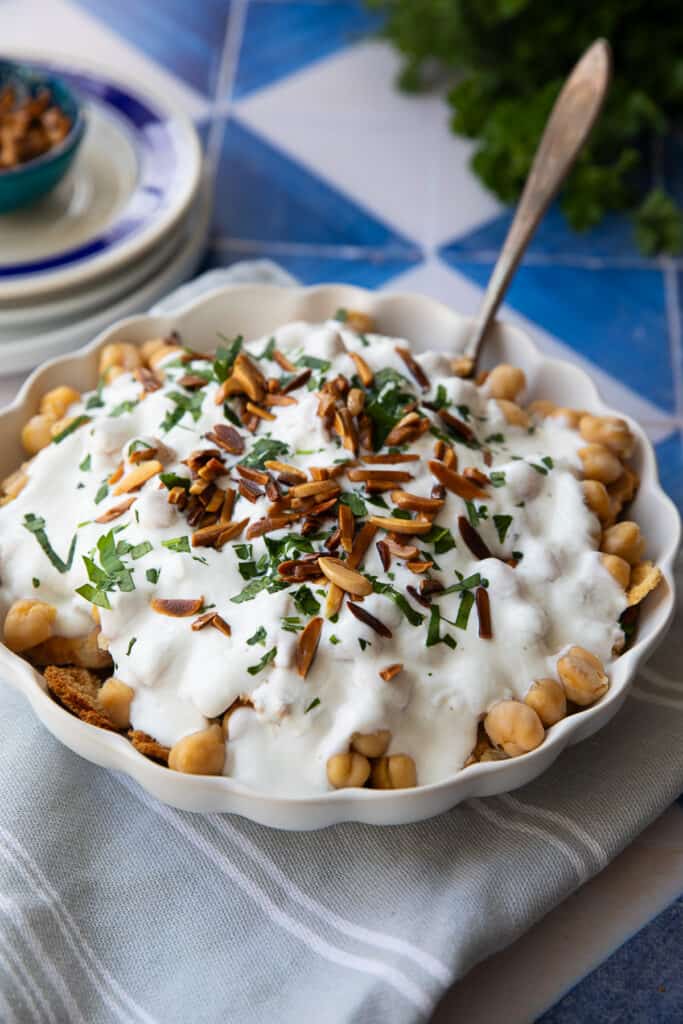
Fatteh is a generous Levantine dish made with crisp pita bread, warm chickpeas and a creamy yogurt, tahini, lemon and garlic sauce, finished with toasted pine nuts, parsley and spices. The contrast between crunchy bread, tender chickpeas and cool creamy sauce is essential to the dish.
 Meat
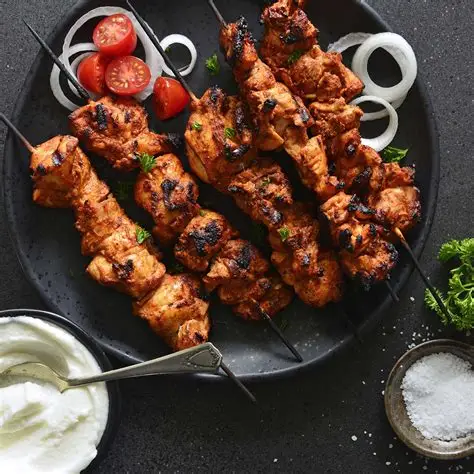
MeatShish Tawook is an iconic Levantine chicken skewer marinated in yogurt, lemon, garlic, oil and spices, then grilled over high heat. A good marinade tenderises the meat, promotes browning and produces juicy chicken with lightly caramelised edges.
 Vegan
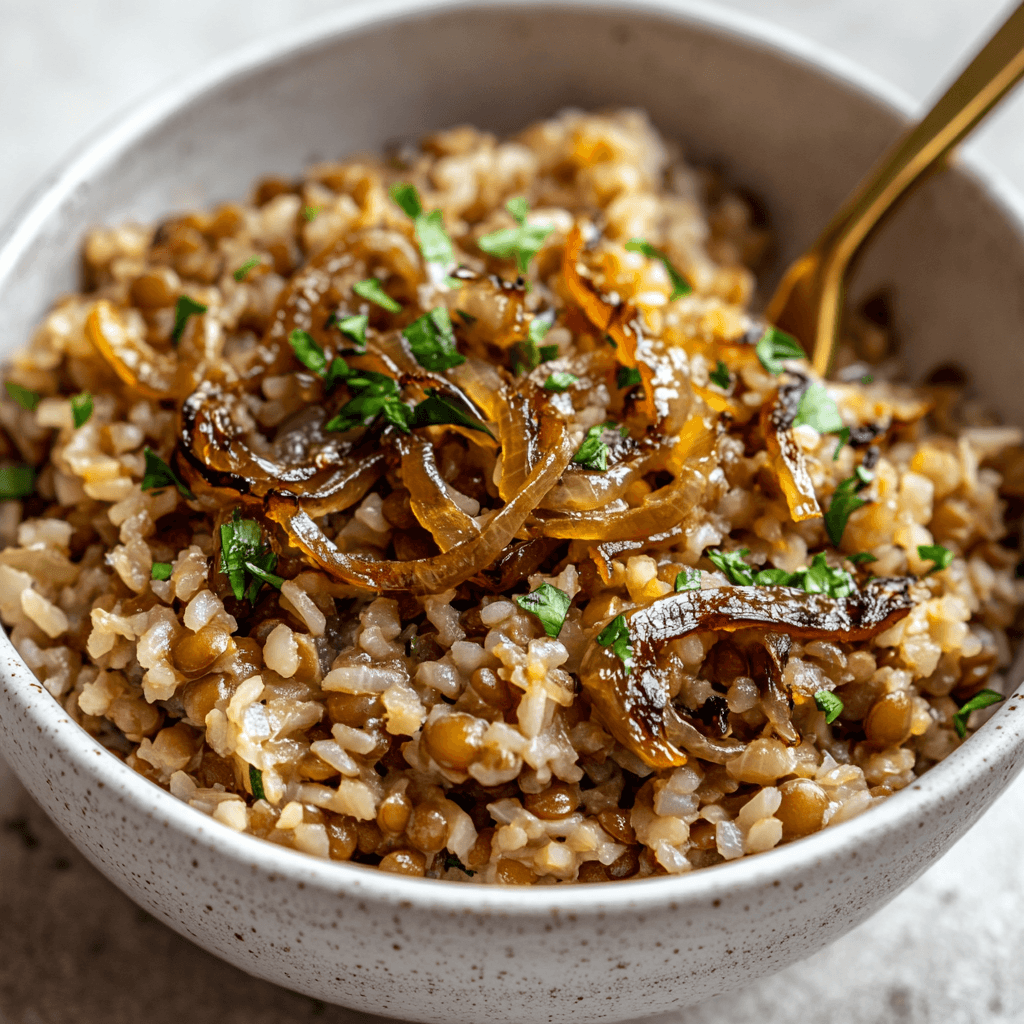
VeganMujaddara is a Levantine classic made with lentils, rice and deeply browned onions. Simple, nourishing and aromatic, it relies on the contrast between tender lentils, separate grains of rice and a generous amount of almost crisp caramelised onions.