Yangzhou Fried Rice (扬州炒饭 – Yángzhōu Chǎofàn)
An iconic Chinese fried rice made with cold, well-separated rice, eggs, shrimp, char siu pork, peas, carrots and spring onions. Fast wok cooking coats each grain with a thin layer of egg and seasoning while preserving a dry, light and non-sticky texture.
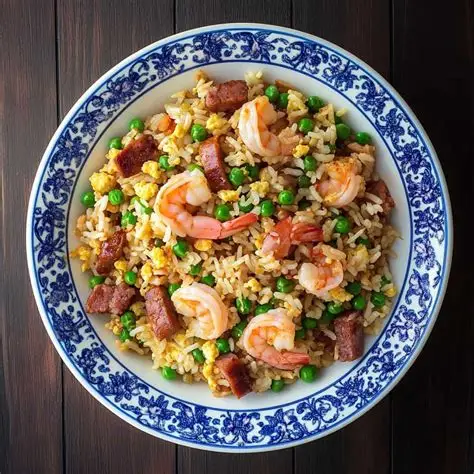
About 540 kcal per serving
Ingredients
- cooked and chilled white rice (ideally cooked the day before, with well-separated grains)700 g
- eggs (lightly beaten)3 pieces
- peeled shrimp (deveined and halved if large)150 g
- char siu pork (cut into small dice)150 g
- green peas (fresh or frozen)100 g
- carrot (cut into very small dice)1 piece
- spring onions (white and green parts separated)4 pieces
- garlic cloves (finely chopped)2 pieces
- light soy sauce (add gradually)30 ml
- Shaoxing rice wine (optional)10 ml
- ground white pepper (adjust to taste)2 g
- vegetable oil (for wok cooking)40 ml
- sesame oil (optional, for finishing)5 ml
- fine salt (use only if necessary)3 g
Preparation
Prepare the rice
Take the chilled rice from the refrigerator and gently break it apart with your fingers or a fork. Separate all clumps without crushing the grains. If the rice feels moist, spread it on a tray for ten to fifteen minutes before cooking so excess moisture can evaporate.
Prepare the fillings
Cut the char siu into small even dice. Finely dice the carrot, separate the white and green parts of the spring onions, chop the garlic and thoroughly pat the shrimp dry with paper towels. Lightly beat the eggs in a bowl.
Blanch the vegetables if needed
If the carrot is firm, blanch it with the peas in boiling water for one minute, then drain and dry thoroughly. This keeps the vegetables colourful and avoids prolonged cooking in the wok.
Heat the wok
Heat an empty wok over high heat until very hot. Add about ten millilitres of vegetable oil and swirl it around the sides. The wok should be hot before each stage so the ingredients do not cook in their own moisture.
Sear the shrimp
Add the shrimp in a single layer. Cook for about one minute on the first side and thirty to sixty seconds on the second, until almost fully opaque. Remove immediately and set aside so they do not become rubbery.
Cook the eggs
Add about ten millilitres of oil to the wok. Pour in the beaten eggs and let them set for a few seconds, then quickly scramble with a spatula into small tender pieces. Remove them from the wok when just cooked.
Cook the aromatics
Add the remaining oil, then the garlic and white parts of the spring onions. Stir-fry for fifteen to twenty seconds over high heat until fragrant without browning heavily.
Add the char siu
Add the diced char siu and stir-fry for about one minute to heat it through and lightly caramelise the edges.
Add the rice
Add the cold rice to the wok. Spread it into a relatively thin layer and leave it in contact with the hot surface for twenty to thirty seconds before tossing. Repeat several times for three to four minutes so the grains heat thoroughly and excess moisture evaporates.
Separate the grains
Use the edge of the spatula to break up any remaining clumps without crushing the rice. The rice is ready for seasoning when the grains move freely around the wok and no compact masses remain.
Season the rice
Pour the Shaoxing wine around the hot sides of the wok, then add about two thirds of the light soy sauce. Toss immediately. Add the white pepper and taste before adding the remaining soy sauce or any salt.
Add the vegetables
Add the peas and diced carrot. Stir-fry for one minute to distribute them evenly and heat them through without softening them too much.
Return the eggs and shrimp
Return the scrambled eggs and shrimp to the wok. Toss for thirty to sixty seconds, just long enough to reheat them and distribute them throughout the rice.
Finish with spring onion
Add the green parts of the spring onions and, if desired, the sesame oil. Stir-fry for another twenty to thirty seconds, then turn off the heat. The rice should be thoroughly hot, dry, light and glossy, with no excess sauce at the bottom of the wok.
Serve immediately
Immediately divide the Yangzhou fried rice among warm bowls or plates. Serve as a complete dish on its own or alongside stir-fried vegetables, a light soup or other Chinese dishes for sharing.
Tips & tricks
- Ideally use rice cooked the day before and chilled in the refrigerator so the grains are firm and separate.
- If using freshly cooked rice, spread it in a thin layer on a tray and cool it completely before frying.
- Break up rice clumps with your fingers before cooking so the grains separate immediately in the wok.
- Prepare all ingredients in advance because wok cooking is very fast.
- Cook moisture-releasing ingredients such as shrimp separately.
- Use a very hot wok to evaporate moisture quickly and avoid mushy rice.
- Add the oil in stages instead of using a large amount at the beginning.
- Do not add too much soy sauce, as Yangzhou fried rice should remain relatively pale.
- Stir-fry the rice until the grains are hot, dry and lightly glossy.
- Add the green parts of the spring onions only near the end to preserve their aroma.
- Taste before adding salt because char siu and soy sauce already contribute salt.
- Serve immediately to preserve the contrast between light rice, tender shrimp and vegetables.
Variations
- Replace the char siu pork with diced cooked ham.
- Add diced roast chicken for a higher-protein version.
- Omit the pork and shrimp and add extra vegetables for a vegetarian version.
- Add finely diced shiitake mushrooms.
- Add small diced bamboo shoots for extra crunch.
- Use larger shrimp cut into pieces for a more generous version.
- Add a few drops of sesame oil at the very end for a stronger aroma.
Storage
Yangzhou fried rice keeps for up to two days in the refrigerator in an airtight container. Cool leftovers quickly after the meal and refrigerate promptly. Reheat in a wok or frying pan over high heat with one tablespoon of water until the rice is thoroughly hot. Avoid repeated reheating. It can be frozen for up to one month, although the shrimp and eggs will be slightly less tender after thawing.
Nutrition facts(per serving)
| Calories | 540 kcal |
|---|---|
| Protein | 24 g |
| Carbs | 67 g |
| Fat | 19 g |
| Fiber | 4 g |
| Sugars | 4 g |
What to serve with this recipe?
- Stir-fried bok choy
- Chinese smashed cucumber
- Light vegetable soup
- Jasmine tea
Frequently asked questions
Reviews
No reviews yet. Be the first to leave one!
Similar recipes
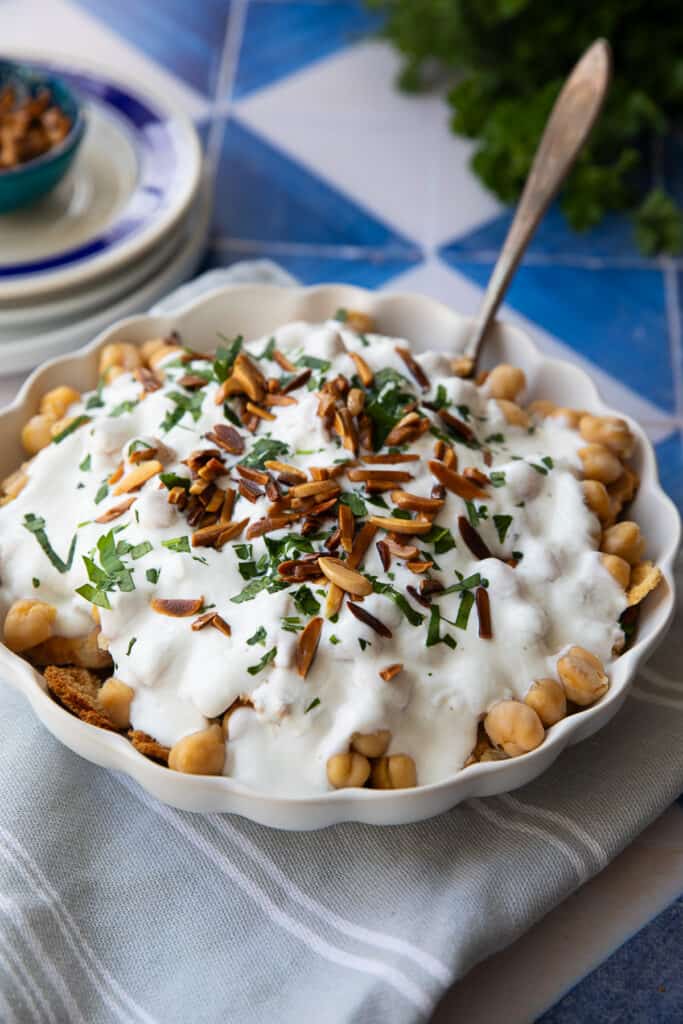 Vegetarian
Fatteh is a generous Levantine dish made with crisp pita bread, warm chickpeas and a creamy yogurt, tahini, lemon and garlic sauce, finished with toasted pine nuts, parsley and spices. The contrast between crunchy bread, tender chickpeas and cool creamy sauce is essential to the dish.
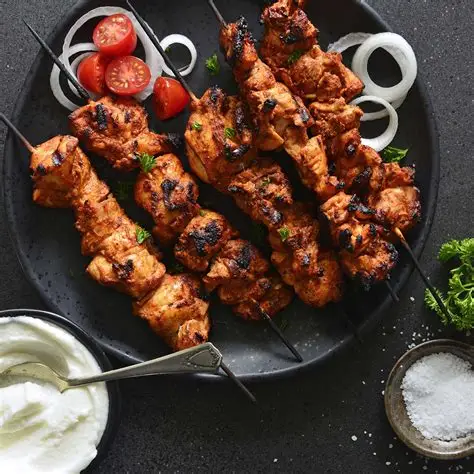 Meat
MeatShish Tawook is an iconic Levantine chicken skewer marinated in yogurt, lemon, garlic, oil and spices, then grilled over high heat. A good marinade tenderises the meat, promotes browning and produces juicy chicken with lightly caramelised edges.
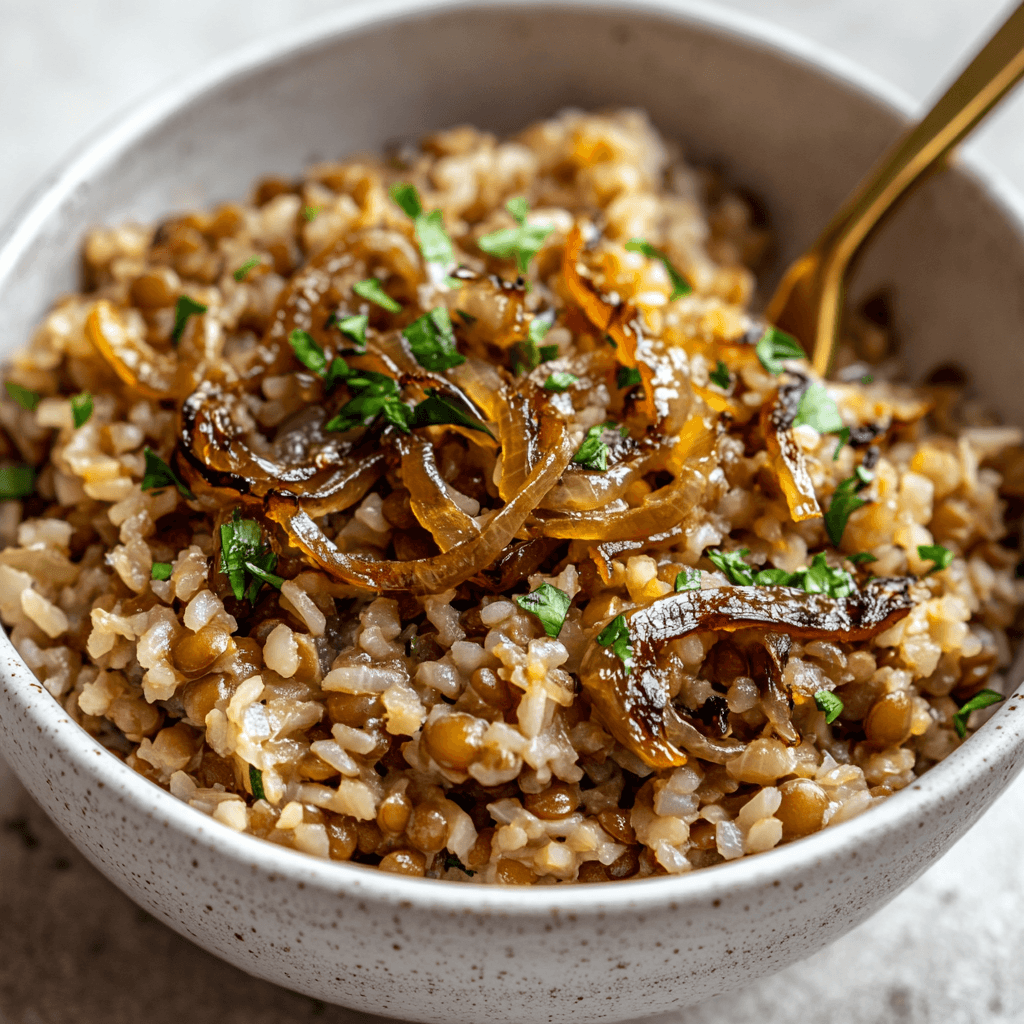 Vegan
VeganMujaddara is a Levantine classic made with lentils, rice and deeply browned onions. Simple, nourishing and aromatic, it relies on the contrast between tender lentils, separate grains of rice and a generous amount of almost crisp caramelised onions.